

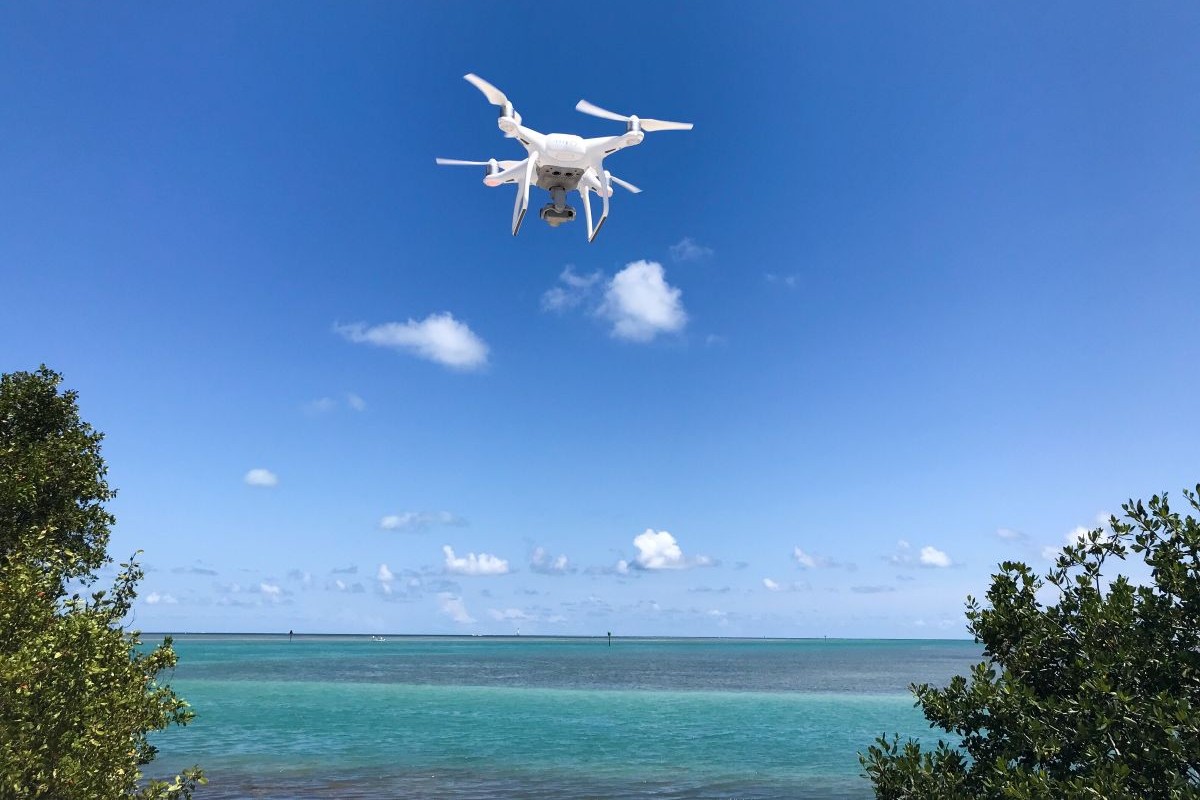
Aerial Videography for Tourism, Hospitality and Destination Marketing
Travel decisions are often made long before a booking engine loads. People want to understand place, distance, access, surroundings, and what the experience feels like across a day, not only what a single room looks like. Aerial videography can answer those questions in seconds because it shows context that ground-level footage cannot show.
For destination marketers and hospitality teams, the value is rarely “drone footage for its own sake”. The value lies in orientation, proof, and confident decision-making: where the property sits, how a visitor arrives, what is nearby, and how the environment shapes the stay. That is where strong planning and professional execution make the difference between footage that looks pleasant and footage that supports outcomes that matter.
Why aerial videography matters in travel marketing
Tourism and hospitality marketing has become more visual, more channel-diverse, and more time-sensitive. Campaigns need adaptable assets for short-form placements, longer-form edits, paid media, trade show screens, and high-performing landing pages. At the same time, travellers compare options quickly and look for signals that reduce uncertainty.
Aerial video sits at the intersection of those needs. It can show scale, routes, proximity, privacy, and the “shape” of a destination in a way that supports both destination branding and conversion-focused property marketing. That is why the most effective work treats aerial footage as part of a broader communications plan rather than a standalone visual flourish.
Destination “hero film” vs. property-level aerials
Hero destination film: place branding
Destination marketing organisations often need a film that introduces a region as a whole. This is about identity, variety, and recognisable signifiers: coastlines, city centres, heritage sites, wilderness areas, and signature activities. Aerial videography supports this by providing establishing sequences that connect multiple locations into one coherent place.
Typical hero requirements include:
- Wide establishing sequences that show terrain and scale
- Recognisable landmarks and district “signposts”
- Route-based sequences that connect points of interest, such as coastal roads or mountain passes
- Visual variety that reflects the destination’s range, not only its highlights
Property-level hospitality aerials: conversion assets
Hospitality marketing often has a more practical job: reduce doubt and answer the questions a booker asks silently. Aerial videography does this well because it can show layout, access, and surroundings in one view.
Property-focused aerial sequences often need to answer:
- Where is it, relative to beaches, attractions, and transport links?
- How big is it, and how is it arranged?
- What surrounds it, and what is the immediate atmosphere?
- How does a guest move through the site, from arrival to amenities?
The difference in planning is simple: hero films prioritise breadth and identity, while property work prioritises orientation and decision support.
Mapping the guest journey from the sky: arrival-to-experience storytelling
A guest journey is not an abstract concept. It is a predictable sequence of concerns: getting there, arriving smoothly, finding the right spaces, and seeing what is available without surprises. Aerial videography can connect that sequence into a single narrative that feels natural because it follows the real path.
A useful structure is the “arrival-to-experience” chain:
- Airport or transport node to main access routes
- Approach to the neighbourhood or surrounding area
- Arrival points such as entrances, parking, drop-off, or reception access
- Primary amenities such as pools, restaurants, spas, conference facilities, trails, or beach access
- Nearby attractions, shown in relation to the property, not as isolated visuals
The most effective sequences show distances implicitly through continuity. Rather than listing minutes and kilometres, the viewer sees that the beach is adjacent, the trail begins on-site, or the town centre sits within a short drive.
- Show the approach in a way that makes sense to a first-time visitor
- Include at least one orientation view that explains the site layout
- Connect amenities in an order a guest would actually use them
- Use proximity views that show what is immediately outside the boundary
When the sequence reflects how a guest thinks, it reduces friction and supports confident decisions without relying on heavy claims.
“Sense of place” cinematography: revealing scale, geography, and context
Aerial videography is particularly effective for travel because it can show geography and context together. That matters for destinations where terrain, distance, and isolation are part of the appeal, such as coastal regions, mountain areas, vineyards, or reserves.
Context-driven aerial planning focuses on what travellers want to understand:
- Remoteness and access, including how the final approach works
- Privacy and density, including what sits around the property
- Views and orientation, including what the “best side” looks onto
- Environmental character, such as wind exposure on a headland or shelter in a valley
- Noise and activity cues, such as proximity to roads or busy promenades
Often the first aerial sequence acts as an establishing shot, giving immediate orientation before moving into closer detail. In tourism and hospitality marketing, this matters because it shows not only where a location is, but also how the site, surroundings, and distances relate.
Signature aerial shot types that perform in travel ads
Orbit reveals
An orbit reveal circles a subject while keeping it centred. In tourism and hospitality, it can show a hotel, lodge, or landmark while also revealing what surrounds it. This is especially useful for properties with a strong setting, such as cliffside locations or waterfront sites.
Lead-in push
A lead-in push is an approach movement that takes the viewer from a wider context toward the entrance or focal point. It supports arrival narratives and works well for resorts, estates, or venues where the approach is part of the experience.
Parallax passes
Parallax refers to the sense of depth created when nearer elements move faster across the frame than distant elements. Aerial videography can create this effect naturally when moving across layered terrain, which suits mountains, forests, and urban skylines.
Top-down patterns
Top-down views show layout and design patterns. They work well for:
- Pools and landscaped courtyards
- Vineyard rows and farm geometry
- Markets, promenades, and street grids
- Coastlines, reefs, and sand formations
Tracking alongside activities
Tracking alongside a moving subject works well for activities that define a destination, such as boats, cyclists, safari vehicles, or hikers. The intent is not speed for its own sake. It is about showing participation and scale in the same view. Shot selection should follow the destination promise. Luxury tends to suit calmer movement and slower pacing, adventure often suits more active sequences, and eco tourism generally benefits from greater distance and longer holds.
- Luxury: Smoother motion, slower pacing, emphasis on setting and privacy
- Family: Layout clarity, amenity adjacency, safe spaces, and ease of movement
- Adventure: Activity sequences connected to the geography that makes them possible
- Eco: Scale and context without intrusive proximity to sensitive areas
When aerial videography supports positioning through deliberate shot choices, it becomes communication rather than decoration.
Seasonality and “booking windows” captured from above
Tourism changes with the seasons, and those changes are clearly visible on video. A destination can look, feel, and behave differently across months, even in the same location. This is why professional planning often treats aerial work as a seasonal library rather than one shoot.
Season-led planning may account for:
- Wildlife seasons where relevant, with appropriate permissions and ethical constraints
- Festival and event windows, including crowd management and organiser coordination
- Peak and off-peak moods, such as busy beach scenes versus quieter winter atmospheres
- Light conditions that suit the location, such as earlier sunsets in winter
Aerial videography that acknowledges seasonality can support multiple campaigns across a year without forcing one mood to represent every period.
Coastal, marine, and water-based aerial production considerations
Coastal work introduces real production constraints. Wind changes quickly, salt spray can affect equipment, water reflections can reduce detail, and take-off and landing zones are not always stable. These constraints are not only technical. They shape what can be filmed safely and consistently.
Common coastal considerations include:
- Wind assessment and site selection for safe launch and recovery areas
- Managing glare and reflection when filming water
- Planning for spray risk near shore break
- Maintaining subject readability when filming boats and smaller watercraft
- Avoiding environments where sand and debris increase risk during take-off and landing
Professional aerial videography teams plan for alternatives. When the main coastline sequence is not viable due to conditions, secondary sequences should already exist in the plan so production time is not lost.
- Inland alternatives that still support the destination narrative
- Higher-altitude context shots when surface-level filming is not safe
- Timing adjustments to avoid worst wind periods
- Additional coverage of fixed landmarks to protect edit continuity
Coastal marketing often looks effortless when it is done well. Behind that ease is planning built around conditions.
Wildlife, reserves, and eco-tourism: ethical filming and conservation-friendly production
Eco tourism can benefit from aerial footage, but it also carries responsibility. Wildlife sensitivity varies by species, environment, and the presence of people. Reserve rules may also be stricter than general civil aviation rules.
Ethical aerial videography in these settings typically involves:
- Coordination with rangers, wardens, or reserve management
- Respect for restricted zones and habitat areas
- Distance and altitude choices that avoid distress to wildlife
- Schedule planning aligned to animal movement patterns and conservation needs
In wildlife contexts, even small changes in animal behaviour caused by filming can be a warning sign that the approach is too intrusive. Avoiding that outcome is both an ethical obligation and a practical safeguard for a destination’s reputation.
Architecture and landscape integration
Hospitality decisions are not only about interiors. Many bookings hinge on how a property relates to its environment: access, views, privacy, and the way spaces connect. Aerial videography can show “how it sits” in a way that complements ground footage.
Effective coverage usually includes:
- Layout views that show room clusters, pathways, and shared spaces
- Orientation views that show view corridors and privacy buffers
- Boundary context, such as adjacency to beaches, parks, or urban districts
- Amenity adjacency, such as spa proximity to quiet areas or family facilities near play zones
The goal is not to make claims louder. It is to show evidence through visual context.
Crowd-heavy destinations: filming markets, promenades, events, and festivals safely
Crowds create atmosphere, which travel marketing often needs. They also introduce safety, privacy, and permission concerns. Professional planning focuses on achieving the sense of place without unsafe proximity.
High-level approaches include:
- Coordinating with organisers and venue management
- Planning flight paths that avoid unnecessary overflight of dense areas
- Selecting times when crowds are present but manageable
- Using higher vantage choices where appropriate to show scale without intrusiveness
Aerial videography in these environments should look respectful. That usually aligns with safer operations and better long-term relationships with local stakeholders.
Multi-property groups and chains: creating an aerial “visual standard” across locations
Hotel groups and multi-site operators often face a consistency challenge. Each location is different, but the brand needs recognisable continuity. Aerial videography supports this through a repeatable shot structure that still allows local character.
A practical standard may include:
- Arrival approach and entrance orientation
- One wide context shot that shows surroundings
- Amenity cluster views, such as pools, restaurants, and wellness areas
- One proximity proof sequence that shows adjacency to a defining feature
Consistency makes editing faster, approvals smoother, and future campaigns easier to assemble.
Edit strategy for travel: modular aerial sequences for ads, reels, and landing pages
Travel marketing distribution is fragmented. A single project often needs versions for multiple formats and durations. Planning for modular editing means filming coverage that can be rearranged without losing meaning.
Modular planning often considers:
- Short versions where each shot must carry meaning quickly
- Longer versions that support pacing and place understanding
- Vertical formats where composition must suit mobile viewing
- Silent viewing scenarios where visuals must still communicate orientation
Achieving this usually means planning a mix of wide orientation shots, connecting movement between areas, amenity coverage, and at least one proximity proof sequence that can stand alone. When aerial videography is filmed with versioning in mind, the footage supports both paid and organic placements without forcing compromises in framing or narrative order. This approach tends to reduce the need for reshoots because the edit has enough variety and continuity to build multiple deliverables.
“Proximity proof” shots that directly influence bookings
Many booking decisions come down to practical questions: how close is the beach, where is the conference centre, is the golf course adjacent, and what sits on the other side of the boundary. Aerial videography can provide proof without relying on text claims.
Effective proximity proof often uses a simple visual logic:
- Start with the property in view
- Reveal the nearby feature in the same sequence
- Hold long enough that the relationship is understood
This is especially valuable for resorts, city hotels, lodges, and venues that depend on access to surrounding attractions.
Weather realism vs. “perfect day” marketing
Some destinations sell sunshine. Others sell mood, season, and atmosphere. Many need both. Aerial videography that only exists in one weather state can limit future campaign flexibility.
Professional planning commonly separates assets into:
- Aspirational conditions that support broad appeal
- Atmospheric conditions that reflect the destination honestly, such as mist, winter light, or dramatic skies
- Golden-hour and mid-day coverage, each with different uses in editing
Weather planning is not only about visuals. It is about ensuring the final library can represent different seasons and price periods without appearing inconsistent.
Sound design and music pairing for aerial tourism
Aerial footage often looks coherent, but it can feel disconnected without thoughtful sound. Sound design is the planned use of natural sound, ambience, and audio transitions to support continuity. In travel marketing, it can communicate place as much as visuals do.
Common approaches include:
- Coastal ambience, city texture, or nature soundbeds appropriate to the location
- Subtle transitions between scenes that avoid abrupt changes
- Music selection aligned to brand tone and audience expectation
Rights matter. Music for marketing use generally requires proper licensing and usage permissions. That includes paid advertising contexts, not only website hosting.
A final perspective on place, proof, and visitor confidence
Travel marketing succeeds when it reduces doubt and supports imagination at the same time. The most effective work uses aerial sequences to show context and relationships: where the visitor is, how they arrive, and what surrounds the experience. That is why aerial videography tends to perform best when it is planned around orientation, seasonality, compliance realities, and modular delivery rather than novelty.
For tourism boards, hotel groups, and destination operators, the strongest results usually come from a library mindset: footage that can support launch campaigns, seasonal pushes, event windows, and longer-term brand presence. When the work is planned and delivered with that in mind, each new campaign starts with more evidence, more options, and fewer assumptions.
If you need aerial videography that works as a reusable content library, not a once-off export, contact Sound Idea Digital. We will help you plan coverage and deliverables that suit multiple formats and campaign phases.
We are a full-service Content Production Agency located in Pretoria, Johannesburg, and Cape Town, South Africa, specialising in Video Production, Animation, eLearning Content Development, and Learning Management Systems. Contact us for a quote. | enquiries@soundidea.co.za | https://www.soundideavideoproduction.co.za| +27 82 491 5824 |