

A Multilingual Health and Safety Induction for Poultry Production
Planning a Health and Safety Induction for a Complex Facility
Astral is an integrated South African poultry producer whose operations span animal feed and premix manufacturing, broiler genetics, poultry production and the supply of day-old chicks. Operating at this scale requires more than efficient production: it demands consistent adherence to strict health, safety, hygiene and animal-welfare standards. Sound Idea Digital was commissioned to produce a comprehensive health and safety induction video for the clients employees, contractors and visitors. The objective was to communicate the procedures governing the Olifantsfontein facility clearly, accurately and in a format that could be understood by a culturally and linguistically diverse audience.
Turning detailed procedures into a clear visual experience
The organisation’s Olifantsfontein operation includes the slaughtering and processing of chickens, as well as the packaging of poultry products. As both an industrial workplace and a food-manufacturing facility, the site presents a particularly demanding training environment. The induction needed to address occupational safety while reinforcing the stringent hygiene and contamination-control measures required when producing food.
The subject matter extended across 19 core areas. These included security and access control, protective clothing, personal hygiene, contamination prevention, housekeeping, pest control, animal welfare, machinery and electrical safety, accident reporting, vehicle movement, fire safety, emergency procedures and environmental compliance.
Presenting this volume of information required careful structure. Rather than treating the induction as a simple record of policies, Sound Idea Digital translated the client’s requirements into a detailed production plan that connected every section of the script to a corresponding action, filming location, prop and participant. This ensured that the production remained organised while allowing each procedure to be demonstrated in the environment where viewers would encounter it.
Demonstrating the correct behaviour
Re-enactments formed a central part of the production. Employees and site personnel demonstrated both compliant and non-compliant behaviour, enabling the video to show viewers what they should do, what they should avoid and how to respond when something goes wrong.
The scenarios ranged from everyday requirements—such as signing in, wearing the correct protective clothing and washing hands and boots—to more specialised procedures involving chemical storage, allergen management, machinery inspections and emergency evacuation.
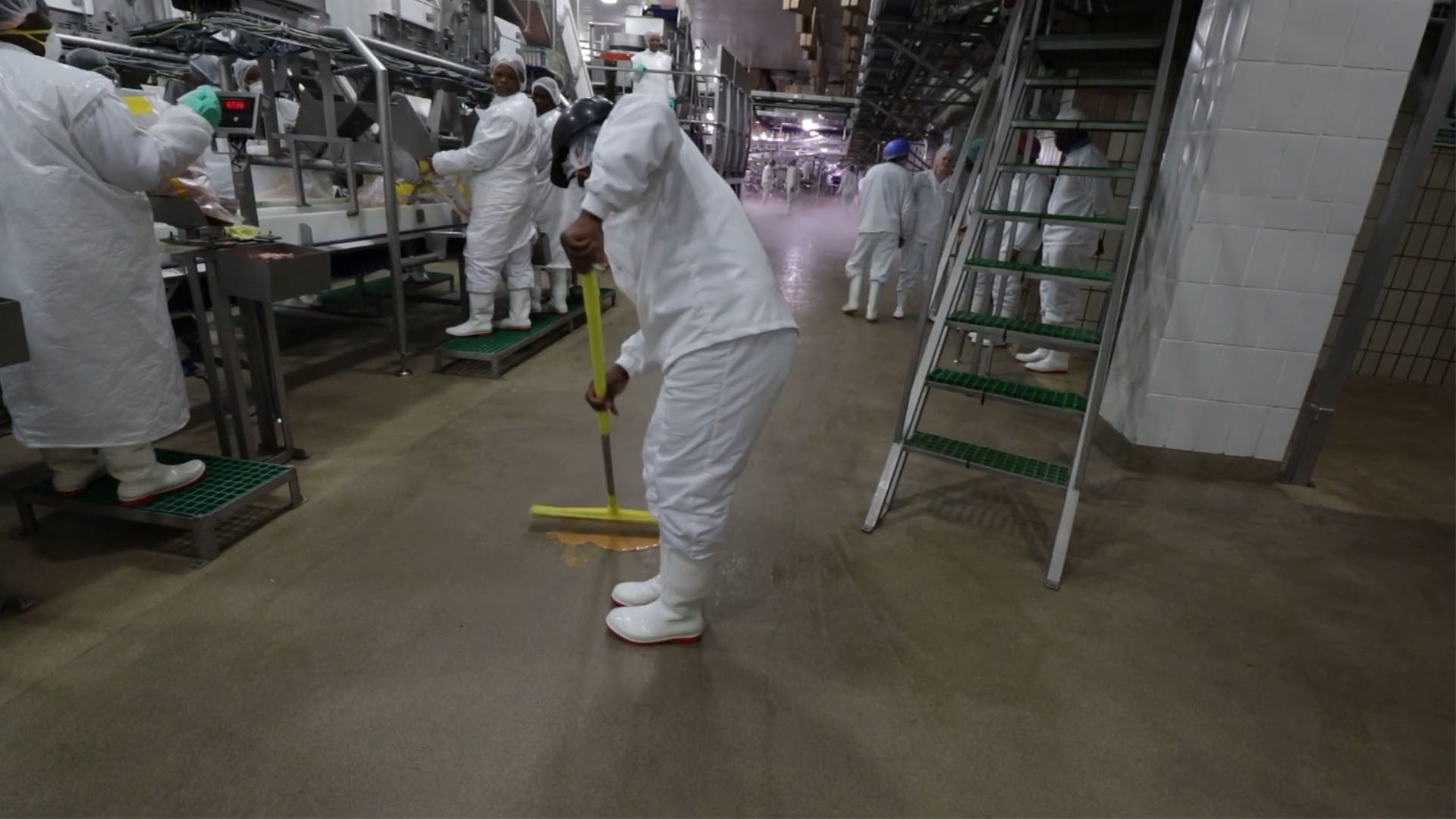
Filming also covered potentially high-risk situations. These included identifying damaged protective equipment, responding to physical contamination, cleaning spillages, reporting injuries, working around forklifts and demonstrating the correct use of a fire extinguisher. By placing these procedures within recognisable workplace scenarios, the production connected formal rules to the practical decisions employees, contractors and visitors may need to make on site.
Coordinating production across an active facility
The filming plan extended throughout the Olifantsfontein operation, including its access points, processing areas, training centre, changing rooms, canteen, clinic, chemical store, dispatch area, workshop and animal-intake facilities.
Working across these environments required detailed coordination. Each scene had to account for the relevant personnel, equipment, protective clothing and operational context. Security guards, supervisors, trainers, clinic staff, artisans, inspectors, forklift drivers, fire-team members and production employees all contributed to creating authentic demonstrations.
This preparation allowed Sound Idea Digital to capture a broad range of content while maintaining continuity between the voice-over, the scripted procedures and the actions shown on screen. It also ensured that each scene supported a specific learning objective rather than functioning as general factory footage.
Giving food safety the attention it demands
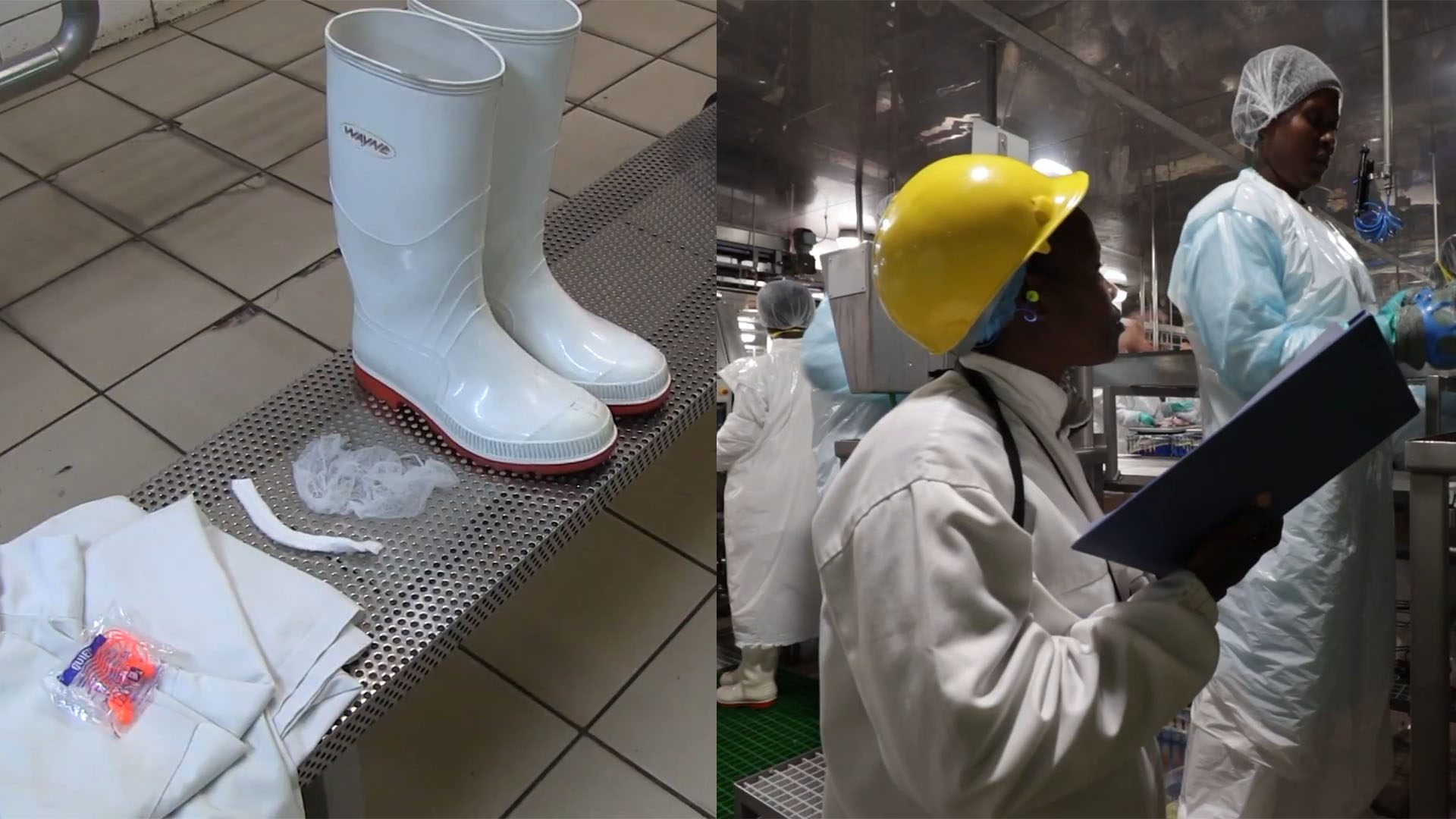
Hygiene and cleanliness were especially important components of the induction. The video addressed correct protective clothing, personal presentation, hand and boot washing, designated eating areas, employee health, pest prevention and the management of physical, chemical, biological and allergen contamination.
Detailed demonstrations helped make these requirements tangible. Viewers could see how protective clothing should be worn and stored, how handwashing should be performed, how damaged equipment should be handled and what should happen when product comes into contact with the floor. This visual approach reinforced the role every person on site plays in protecting both colleagues and consumers.
Representing animal welfare responsibly
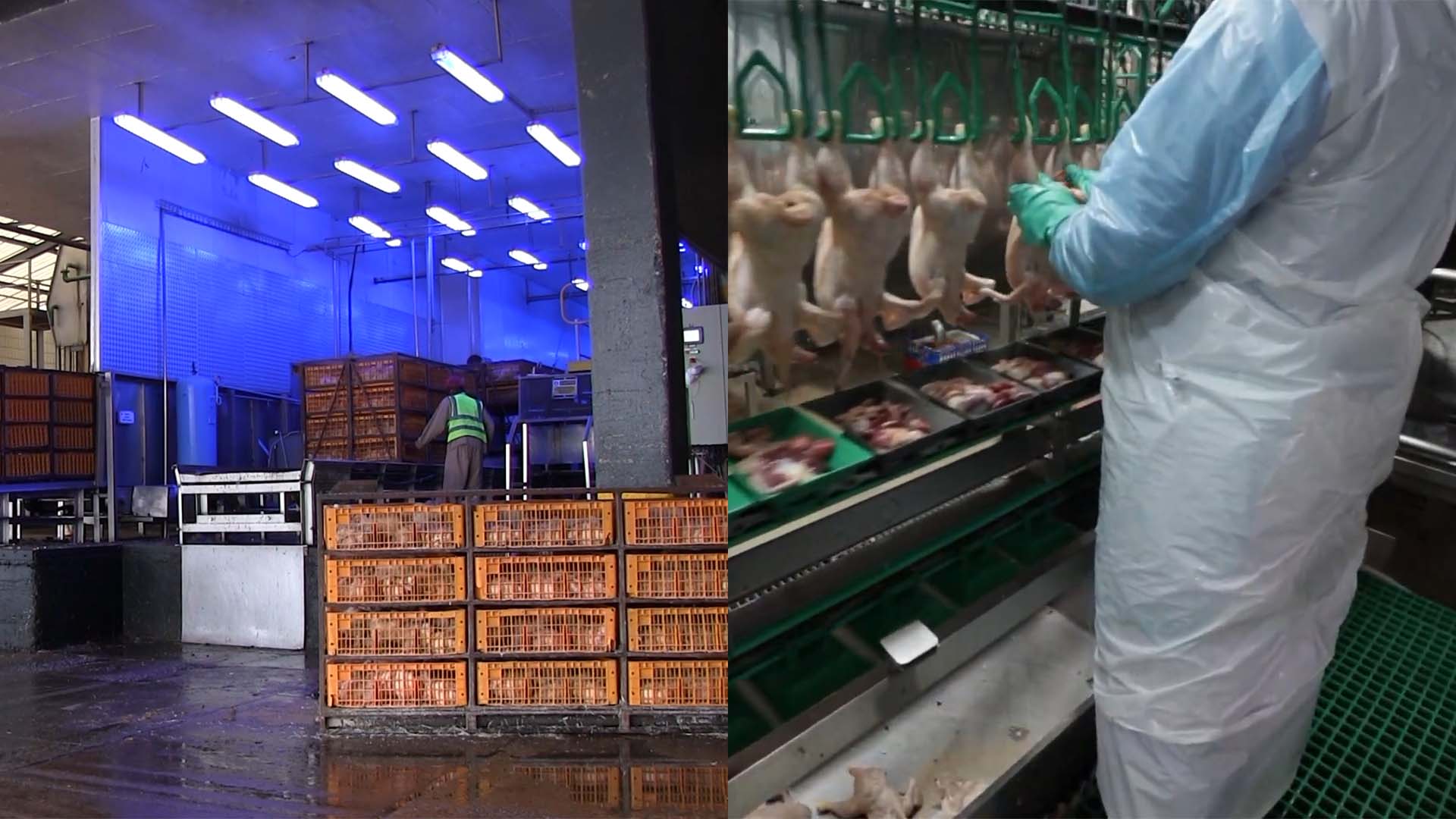
Animal welfare was another significant part of the production. Filming documented the measures used to protect birds from distress and extreme temperatures, including ventilation, fans and misting systems in the holding area. The induction also reinforced the importance of humane handling, trained personnel and confirming that birds are no longer alive before they enter the scalding tank.
Seeing these processes first-hand left a strong impression on cinematographer Francois Karstel. Although he initially wondered whether spending hours behind the scenes would change how he felt about eating chicken, the facility’s cleanliness and the care taken throughout the process had the opposite effect: his confidence in the production process increased, and chicken remained firmly on his lunch menu.
Communicating across five South African languages
For safety communication to be effective, it must be understood by the people expected to act on it. With this in mind, the induction was produced in five of South Africa’s official languages: English, isiZulu, Sesotho, isiXhosa and Afrikaans.
Creating the five versions involved translating the script, recording a dedicated voice-over for each language and carefully editing every version so that the narration remained aligned with the on-screen actions. This was not simply a matter of replacing one audio track with another. Each edit required close attention to timing and meaning to ensure that the visual demonstrations continued to support the spoken instruction.
An end-to-end production built around understanding
To make the health and safety induction accessible to a linguistically diverse workforce, it was produced in five of South Africa’s official languages. The completed health and safety induction brought together detailed scripting, location planning, coordinated re-enactments, on-site filming, multilingual voice-over production and precision editing. Every stage served the same purpose: turning an extensive set of safety, hygiene and operational requirements into a practical visual resource for the people entering the facility.
For Sound Idea Digital, the project demonstrates the value of an integrated production approach. By managing the process from content planning and filming through to translation, voice recording and final editing, the team transformed complex compliance information into a cohesive training experience-one designed for the organisation’s workplace, its people and the realities of its operations.
A successful health and safety induction should do more than communicate rules—it should show people how those rules apply within their working environment. Share your policies, operational requirements and audience needs with Sound Idea Digital, and we’ll help turn them into clear, engaging visual training. Contact us to discuss your induction and identify the next steps from scripting through to multilingual production.