

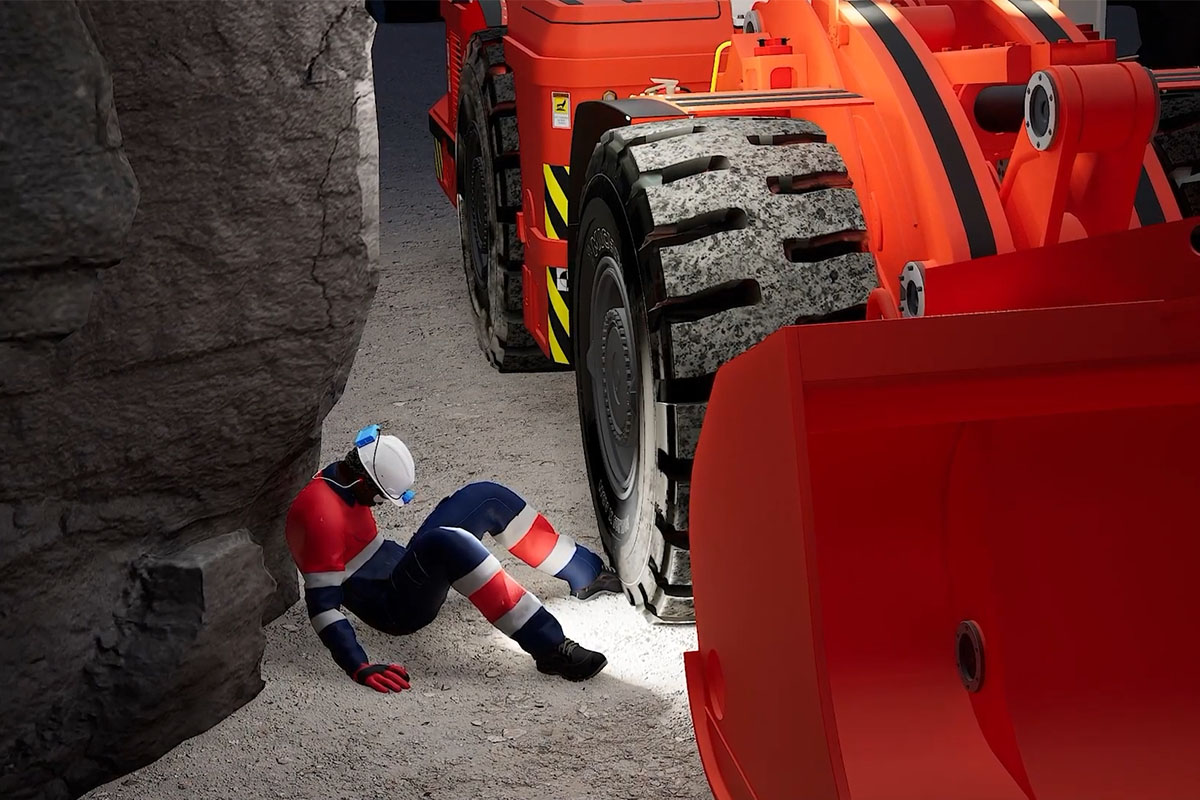
3D Animation Accident Reconstruction in Industrial and Mining Environments
Every workplace accident tells a story-but understanding exactly what happened is not always straightforward. In industrial and mining environments, incidents often involve multiple people, large pieces of equipment, moving vehicles, environmental factors and split-second decisions. While photographs, witness statements and written reports remain essential components of an investigation, they do not always communicate the sequence of events clearly or accurately. This is where 3D animation accident reconstruction has become an invaluable tool. By transforming investigation data into a realistic visual representation, organisations can better understand incidents, communicate findings more effectively and use the lessons learned to improve workplace safety. As technology continues to evolve, 3D animation is no longer reserved for large engineering projects or marketing campaigns. It has become a practical and highly effective solution for accident investigations, safety training and operational improvement across the mining, manufacturing, construction and heavy industrial sectors.
What is 3D Animation Accident Reconstruction?
3D animation accident reconstruction is the process of recreating an incident within a three-dimensional digital environment using verified investigation data. The objective is not to speculate about what might have happened, but to present a clear visual representation of the available evidence.
Unlike a simple animated illustration, a professional accident reconstruction is developed using information gathered during the investigation, which may include:
- Incident reports
- Site surveys and measurements
- Engineering drawings
- Equipment specifications
- Photographs
- CCTV footage
- Drone imagery
- Laser scanning data
- Witness statements
- Environmental information such as lighting, weather or ground conditions
Using these sources, artists and technical specialists recreate the environment, equipment and sequence of events as accurately as possible. The resulting animation enables investigators, management and stakeholders to visualise complex incidents in a way that written documentation alone cannot achieve.
Why Traditional Investigation Methods Have Limitations
Industrial incidents rarely occur in ideal conditions. They may happen underground, inside processing plants, on construction sites or in remote locations where visibility is poor and evidence is difficult to preserve.
Even a thorough investigation can face challenges such as:
- Conflicting witness accounts
- Limited or obstructed camera footage
- Damage to equipment following the incident
- Incomplete photographic evidence
- Complex interactions between machinery and personnel
- Difficulty communicating technical findings to non-specialists
A detailed written report may describe the sequence of events accurately, but readers often struggle to visualise movement, timing, distances and the interaction between multiple pieces of equipment.
Three-dimensional animation bridges this gap by presenting the incident from carefully selected viewpoints, allowing viewers to follow the sequence of events step by step.
The Benefits of 3D Animation Accident Reconstruction
Improved Understanding of Complex Incidents
Some accidents involve numerous contributing factors occurring over a matter of seconds. A visual reconstruction allows investigators and decision-makers to see how these events unfolded in sequence.
Rather than interpreting technical descriptions or static diagrams, viewers can observe vehicle movements, equipment operation, personnel locations and environmental conditions within the same visual context.
This often leads to a clearer understanding of the incident for everyone involved.
Enhanced Root Cause Analysis
Effective safety management depends on identifying not only what happened, but why it happened.
A well-developed reconstruction helps investigators examine:
- Equipment positioning
- Visibility limitations
- Human interaction
- Environmental conditions
- Procedural deviations
- Timing between events
Visualising these factors together can reveal contributing circumstances that are more difficult to recognise when reviewing individual documents separately.
Improved Communication
Accident investigations typically involve people from different disciplines, including engineers, safety officers, operational managers, insurers, legal teams and regulators.
Each audience brings different levels of technical knowledge.
A professionally produced animation provides a common visual reference that simplifies technical discussions and reduces the likelihood of misunderstandings.
This makes meetings more productive and enables stakeholders to focus on corrective actions rather than interpreting complex reports.
Consistent Documentation
A completed animation becomes a permanent visual record of the investigation findings.
It can be incorporated into investigation reports, management presentations, insurance documentation and future training programmes while ensuring the same factual sequence is communicated consistently.
Faster Decision Making
Senior management often need to review incidents quickly while balancing operational responsibilities.
Instead of reading extensive documentation before forming an understanding of the incident, they can view a concise animation that communicates the key events in a matter of minutes, supported by the detailed investigation report.
Applications in Mining
Mining operations present unique challenges due to confined spaces, heavy machinery, changing ground conditions and complex operational environments.
3D animation accident reconstruction has proven valuable for incidents involving:
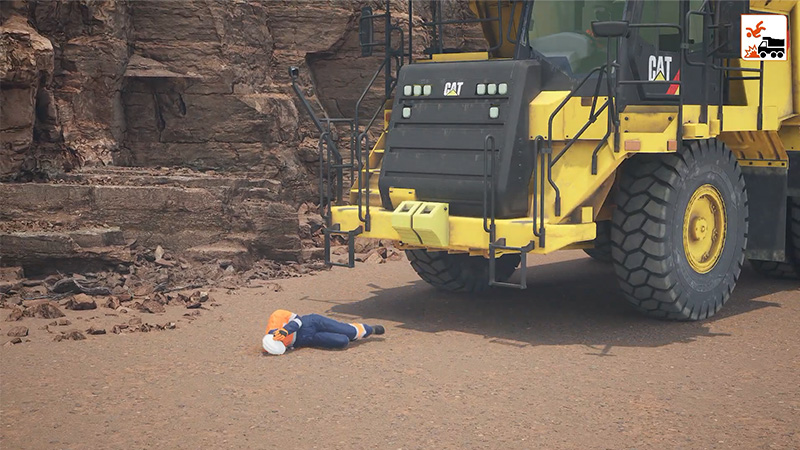
- Haul truck collisions
- Light vehicle interactions
- Conveyor belt accidents
- Crusher incidents
- Underground machinery collisions
- Fall-of-ground events
- Shaft accidents
- Drill rig incidents
- Explosions
- Conveyor maintenance accidents
- Confined space incidents
- Working-at-height accidents
- Mobile equipment interactions
- Material handling incidents
Mining companies also use reconstructed incidents during safety campaigns to demonstrate the real consequences of procedural failures without exposing employees to graphic imagery.
Applications Across Heavy Industry
Although mining is one of the largest users of accident reconstruction, the technology has applications across virtually every industrial sector.
Industries that benefit include:
- Manufacturing
- Construction
- Oil and gas
- Petrochemical plants
- Power generation
- Warehousing
- Logistics
- Ports
- Food processing
- Water treatment facilities
- Heavy engineering
- Chemical processing
Wherever complex equipment, vehicles and people interact, 3D animation can assist with understanding incidents and improving future safety performance.
How the Accident Reconstruction Process Works
Every project is unique, but most follow a structured workflow.
1. Initial Consultation
The project begins with discussions between the client, investigators and animation team to establish the objectives, available evidence and required outputs.
2. Evidence Collection
Available investigation material is reviewed and organised.
This may include photographs, engineering drawings, survey information, witness statements and video footage.
3. Building the Digital Environment
The accident location is recreated in three dimensions.
Buildings, roadways, tunnels, machinery, equipment and surrounding infrastructure are modelled to match the actual site as closely as possible.
4. Equipment Modelling
Vehicles and machinery involved in the incident are recreated using technical drawings, manufacturer specifications or site measurements.
This ensures dimensions, movement and positioning reflect the actual equipment.
5. Animation Development
Using verified investigation findings, the sequence of events is animated.
Camera angles are carefully selected to communicate the incident clearly while maintaining accuracy.
6. Technical Review
Investigators and subject matter experts review the animation to confirm that it accurately reflects the available evidence.
Adjustments are made where necessary before final approval.
7. Final Production
The completed animation is rendered in formats suitable for presentations, investigations, training programmes or online distribution.
Additional versions may include narration, annotations, subtitles or motion graphics to improve clarity.
Turning Investigations into Powerful Training Resources
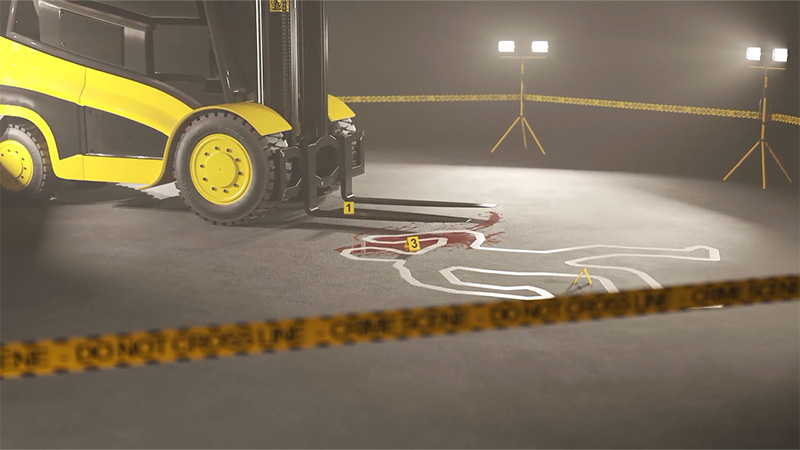
One of the greatest advantages of accident reconstruction is that the work does not end when the investigation concludes.
Many organisations repurpose reconstructed incidents as training material to prevent similar accidents from occurring in future.
These animations can be incorporated into:
- Employee inductions
- Safety awareness programmes
- Toolbox talks
- Refresher training
- Supervisor development
- Leadership workshops
- Contractor onboarding
- eLearning courses
Employees generally retain information more effectively when they can see realistic workplace scenarios rather than reading lengthy reports.
Animations also create opportunities for discussion by encouraging learners to identify hazards, procedural failures and opportunities for improvement before revealing the investigation findings.
Supporting Legal, Regulatory and Insurance Processes
Accident reconstruction animations can also assist with communicating technical information during formal investigations.
They may be used to support:
- Internal investigations
- Regulatory inspections
- Insurance claims
- Contractor investigations
- Arbitration proceedings
- Legal consultations
It is important to recognise that the purpose of the animation is to illustrate the findings of an investigation based on verified evidence. It should not be presented as an independent determination of fault or liability.
Maintaining this distinction helps preserve the credibility and objectivity of the reconstruction.
Why Accuracy Is Essential
The value of an accident reconstruction depends entirely on its accuracy.
Professional productions place significant emphasis on ensuring that:
- Dimensions are correct
- Equipment is accurately represented
- Distances are measured correctly
- Timing reflects the investigation findings
- Environmental conditions are appropriately depicted
- Camera perspectives do not distort the sequence of events
The animation should always remain faithful to the available evidence. Where uncertainty exists, this should be clearly acknowledged rather than replaced with assumptions.
A transparent, evidence-based approach builds confidence among investigators, management and external stakeholders.
Technology Behind Modern Accident Reconstruction
Today’s accident reconstructions combine advanced digital technologies to produce highly accurate visualisations.
These may include:
- High-resolution 3D modelling
- Photorealistic rendering
- CAD model integration
- Drone mapping
- Laser scanning compatibility
- Motion graphics
- Interactive visualisations
- Virtual reality environments
- Multi-camera presentations
- High-definition and 4K video output
As these technologies continue to improve, accident reconstructions are becoming increasingly realistic, accessible and cost-effective.
Choosing the Right Animation Partner
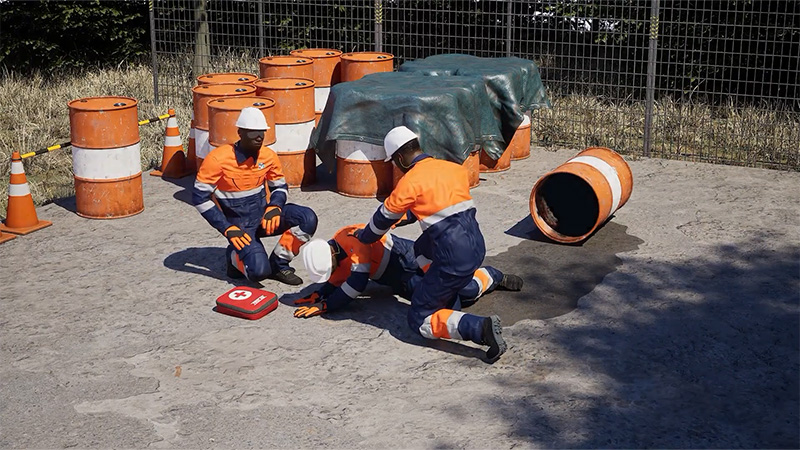
Developing an effective accident reconstruction requires more than technical animation skills.
The production team should understand industrial environments, engineering principles and safety communication.
When selecting a provider, organisations should look for experience in:
- Mining and industrial operations
- Technical illustration
- Engineering communication
- Safety training
- Confidential project management
- Collaboration with investigation teams
- Creating educational content from technical material
An experienced animation partner will know how to balance visual quality with technical accuracy, ensuring the final production is both engaging and trustworthy.
Frequently Asked Questions
The duration depends on the complexity of the incident, the amount of available evidence and the level of detail required. Smaller projects may be completed within a few weeks, while complex investigations involving multiple assets or extensive environments may take considerably longer.
The more complete the investigation data, the more accurate the reconstruction. Typical inputs include photographs, site measurements, equipment specifications, witness statements, engineering drawings, CCTV footage and investigation reports.
Yes. Professional animation studios routinely work under non-disclosure agreements and implement secure processes to protect confidential operational information.
In many cases, existing CAD models and engineering drawings can be incorporated into the reconstruction, reducing production time and improving accuracy.
Yes. If the investigation develops further, animations can often be revised to reflect updated findings or additional evidence.
Absolutely. Many organisations transform reconstructed incidents into interactive eLearning modules that include narration, knowledge checks and decision-making exercises, helping employees understand both what happened and how similar incidents can be prevented.
The Lasting Value of 3D Animation Accident Reconstruction
Every workplace incident presents an opportunity to learn, improve and strengthen safety practices. While written reports remain a cornerstone of any investigation, they cannot always convey the complexity of real-world events.
3D animation accident reconstruction bridges this gap by transforming technical evidence into clear, engaging visual narratives that improve understanding across all levels of an organisation. From supporting investigations and communicating findings to enhancing training and driving continuous improvement, these animations have become an invaluable resource for modern industrial and mining operations.
When developed with technical accuracy and a commitment to factual integrity, 3D accident reconstructions do far more than illustrate an incident, they help organisations build safer workplaces by ensuring that the lessons of today are understood, remembered and applied to prevent the accidents of tomorrow.
If you’re looking to turn investigation findings into evidence-based visual reconstructions, Sound Idea Digital can help. We work with mining, industrial and engineering organisations to develop 3D animation accident reconstructions that support investigations, training and safety improvement. Get in touch to discuss your next project.