

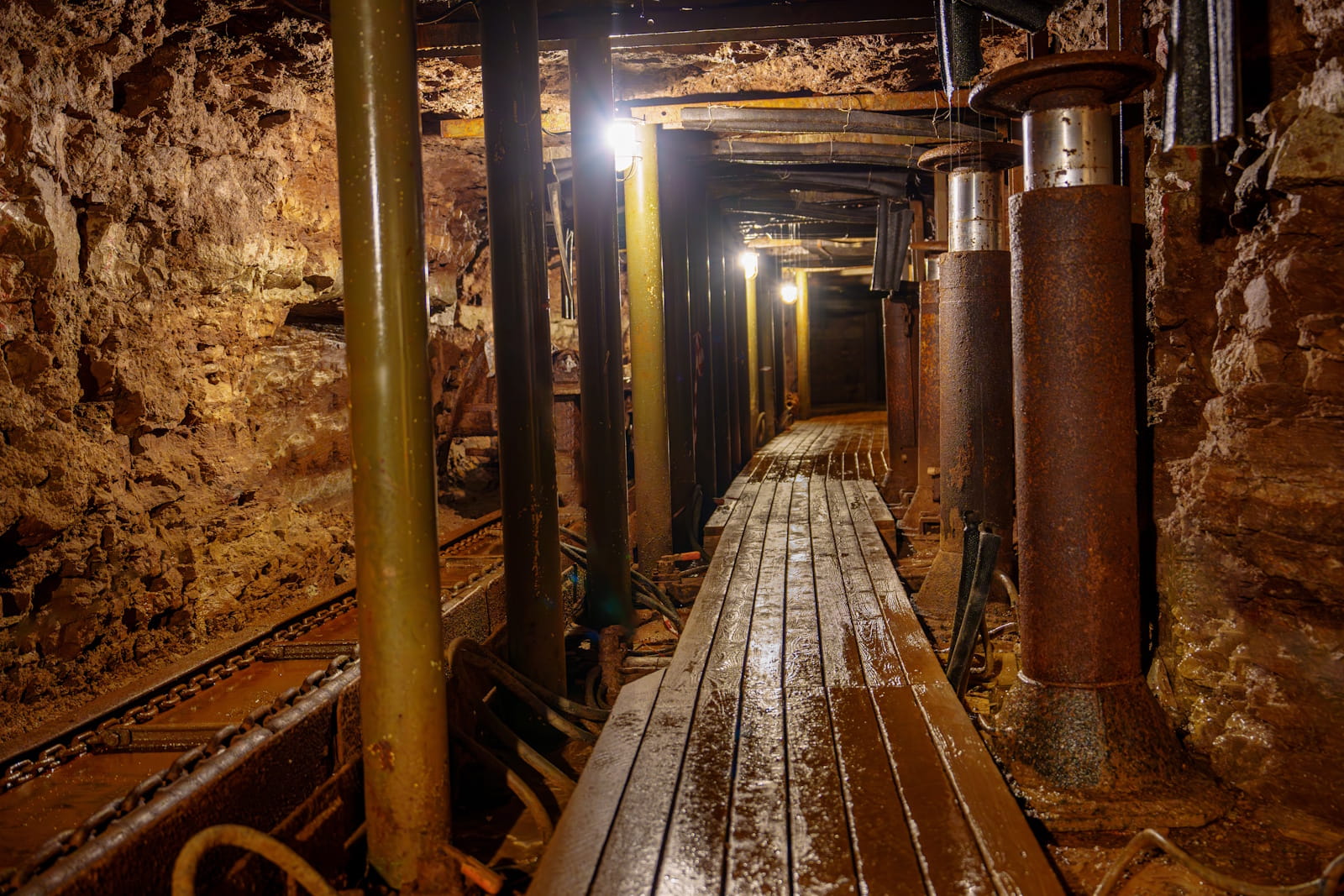
Underground vs Open-Pit Mining Safety Videos: A Practical Guide
Each mine has its own layout, equipment, work practices and risk profile, so a safety video should reflect the site where workers will use what they have learned. By making the differences clear, underground vs open-pit mining safety videos can help workers recognise which procedures apply to each environment and where the same rules carry across the operation.
South Africa recorded 42 mining fatalities in 2024, compared with 56 in 2023. Transportation and mining accounted for 33% of fatalities, while falls of ground accounted for 29%. These figures underline why clear communication about site procedures matters, particularly when workers move between different mine environments. They also point to the importance of using each mine’s current risk assessment and approved procedures as the foundation for training.
Why Underground vs Open-Pit Mining Safety Videos Need Different Approaches
An underground operation and an open pit can have different access routes, equipment, working conditions and emergency arrangements. Even two mines using the same mining method may have different layouts and operating procedures. A generic hazard list cannot explain those differences or tell workers which rules apply at their site.
The video brief should come from the mine’s risk assessment and approved procedures. The safety team should identify the intended viewers, the hazards they need to recognise and the actions they are expected to take. This keeps the training relevant to the operation and helps distinguish between information for everyone and instructions for particular work areas or tasks.
- Use the site’s risk assessment: Identify the hazards, controls and procedures that apply to the specific mine.
- Identify the audience: Decide whether the video is for all staff, contractors, visitors or a particular work group.
- Separate common and environment-specific instructions: Make it clear which rules apply across the operation and which change underground or in the open pit.
- Use approved examples: Base demonstrations on the mine’s procedures and current working conditions.
A risk-based brief helps the production team choose examples that reflect what workers actually encounter. It also gives the safety team a clear way to check that the video communicates the mine’s intended controls.
For underground vs open-pit mining safety videos to be useful, they need to explain not only what workers should do, but where and when each instruction applies. That distinction can be reinforced through clear section labels, site footage and consistent language.
Build the Video Around Current Procedures
Before scripting begins, the mine should provide the production team with current source material. This may include site maps, access rules, PPE requirements, traffic plans, emergency procedures and instructions for working around equipment. The safety team can confirm which documents apply and flag any rules that should not be simplified or paraphrased.
The team should also decide what belongs in a general induction and what needs a separate module or practical demonstration. A single video for all staff can introduce common expectations, then direct viewers to clearly labelled underground and open-pit sections. For underground vs open-pit mining safety videos to be useful, workers need to understand both the safety message and when it applies.
Underground vs Open-Pit Mining Safety Videos: The Underground Module
An underground module should show the mine’s own access arrangements, authorised routes and restricted areas. It can explain how workers should respond to changing ground conditions and what site rules apply in areas where space or movement is limited. The safety team should decide which of these topics are relevant to the particular operation.
Depending on the site, the module may also cover ventilation arrangements, communication methods, underground transport and emergency response. Demonstrations should use approved procedures and current equipment. Emergency instructions should explain the site’s actual alert and response arrangements, so workers are not left to infer what to do from a generic example.
- Access and movement: Show authorised entry points, routes and movement rules.
- Restricted areas: Explain how workers identify areas they may not enter and where access is controlled.
- Ground conditions: Show the site’s procedures for recognising and reporting changing or unsafe conditions.
- Ventilation and communication: Explain relevant site arrangements, including approved communication methods.
- Transport and emergencies: Demonstrate the mine’s rules for moving around underground transport and following its emergency procedures.
The mine’s safety team should identify which procedures apply before any scene is scripted or filmed. Site maps, demonstrations and terminology should be checked against approved information so viewers see the routes and practices they are expected to follow.
A clearly marked underground module can help workers distinguish these instructions from open-pit rules. In underground vs open-pit mining safety videos, that separation is especially useful when employees work across both environments.
What the Open-Pit Module Should Show
An open-pit module can explain the mine’s rules for working around pit edges, benches, haul roads and large mobile equipment. Use the site’s traffic plans and operating procedures to show routes, exclusion zones, access restrictions and how workers are expected to behave near vehicles. If blasting areas are part of the operation, include the relevant warning, clearance and access procedures approved by the mine.
Footage should reflect current site conditions, including its signs and equipment. The 2024 fatality figures show transportation and mining among the leading categories of fatal incidents. That makes it especially useful to show workers how the site manages vehicle movement and pedestrian access. In underground vs open-pit mining safety videos, practical examples can make these differences easier to recognise.
- Pit edges and benches: Show the site’s rules for approaching, working near or entering these areas.
- Haul roads: Explain approved routes, traffic rules and how workers should behave around vehicles.
- Large mobile equipment: Demonstrate the site’s controls for working near operating machinery.
- Blasting areas, where relevant: Cover the mine’s approved warnings, access restrictions and clearance procedures.
- Changing site conditions: Explain where workers should find current instructions if routes, boundaries or work areas change.
The mine should check that signs, vehicles and routes shown in the video match current conditions. If the site changes, the affected scenes may need to be reviewed so they continue to reflect the approved procedures.
This site-specific approach helps workers understand the controls they will encounter in practice. It also makes the difference between underground and open-pit instructions visible, rather than relying on narration alone.
Shared Induction Content and Task-Specific Instruction
Some information applies across the mine and can be introduced in a general induction. This may include PPE requirements, hazard reporting, restricted-area awareness, general rules around machinery and what to do in an emergency. A shared introduction gives workers a common foundation before the video moves into environment-specific procedures.
Other subjects may need their own module, such as a particular underground access procedure, open-pit traffic controls or equipment operation. The mine should decide whether a video is enough or whether the topic also requires a practical demonstration or assessment. Keep the distinction clear: general induction sets expectations, while task-specific training explains the steps a worker must follow in a particular situation.
Plan Filming Around Mine Conditions
Filming at an active mine requires coordination with site personnel. Access approvals, inductions, escorts, safe filming locations and suitable times should be agreed in advance. Lighting, noise, dust, weather and shift patterns can affect where and when the crew can work, while production planning should limit disruption to operations.
Live action can help workers recognise their own workplace, equipment, signage and approved demonstrations. Animation can explain layouts, processes or hazardous situations that should not be recreated for filming. A blended video can link an animated explanation to footage from the actual site. When producing underground vs open-pit mining safety videos, clear transitions can show viewers when the setting and its rules have changed.
- Confirm access and site requirements: Agree on inductions, approvals, escorts and filming restrictions with mine personnel.
- Choose filming times carefully: Plan around shifts, active work areas and suitable lighting or weather conditions.
- Manage sound and visibility: Account for noise, dust and other conditions that may affect usable footage.
- Agree safe filming positions: Make sure the crew follows site rules and films demonstrations from approved locations.
- Select the right format: Use live action, animation or a blend based on the procedure and the safety of filming it.
Careful planning helps the crew capture useful footage while following mine requirements and limiting disruption. The mine’s personnel should remain involved in decisions about where and how filming takes place.
The production format should make procedures easier to understand. Live action can show familiar site details, while animation can explain high-risk situations without recreating them. A blended approach can connect both kinds of explanation in underground vs open-pit mining safety videos.
Review the Video, Check Understanding and Keep It Current
Subject-matter experts should review the script before filming to check the procedures, terminology and demonstrations. They should review the edit as well, including the narration, captions and visuals. This gives the mine a chance to correct inaccuracies before the video is approved and used with workers.
A short knowledge check or supervisor-led discussion can help identify whether viewers understand the key steps. Where a procedure requires practical competence, the video should support the mine’s wider training and assessment process. Assign responsibility for reviewing the content when procedures, equipment or site conditions change, and make the approved version easy to identify.
Case Study: One Workforce, Two Mine Environments
A mining company with underground and open-pit operations wants to create a safety video for all staff. Some workers move between the two environments, and managers want the video to cover PPE, general protocols and essential safety information while making the differences between the mine types clear.
The company’s safety team reviews its risk assessments, approved procedures, emergency information and traffic plans. It separates the content that applies to all workers from the instructions specific to each environment. The team then plans a shared induction section followed by distinct underground and open-pit modules. Mine personnel coordinate filming access and timing so the crew can follow site requirements and avoid disrupting work.
The review shows that a clear structure can give staff a common safety foundation while helping them recognise which rules apply in each setting. The company checks the script and edit with relevant subject-matter experts, then uses a knowledge check or supervisor discussion to gauge understanding. Its next steps are to record the approved version and review it when relevant procedures or conditions change. This is one way to make underground vs open-pit mining safety videos easier to follow across a workforce.
Where Can I Hire a Safety Video Production Company That Specialises in Mining Industry Videos?
Sound Idea Video Production is a great safety video production company specialising in mining industry videos. We create safety induction videos in live action, 2D or 3D animation, or a combination of formats. For a mining safety video, our risk assessment videos can help show potential hazards and preventive measures, while emergency response training videos can explain procedures step by step. We can also create safety induction content covering hazard recognition, protocols and workplace practices for employees, contractors and visitors.
Our compliance training videos can communicate regulations, standards and best practices, while toolbox talk videos can reinforce a specific safety topic in a short, focused format. We can produce content in multiple languages to help a diverse workforce understand important instructions. We can also integrate 3D animation with live-action footage or create animated accident recreations to visualise high-risk situations safely. PPE and equipment handling videos can demonstrate the correct use, maintenance and inspection of safety gear and machinery, helping workers see how these practices fit into the mine’s approved procedures.
- Risk assessment videos: We can visually explain relevant hazards and preventive measures identified by the mine.
- Emergency response training videos: We can show approved emergency procedures through clear, step-by-step instruction, with optional 3D animation for accident recreation.
- Safety induction videos: We can cover hazard recognition, protocols and workplace practices for employees, contractors or visitors.
- Compliance training videos: We can present the regulations, standards and best practices relevant to the training topic.
- Toolbox talk videos: We can create short videos focused on day-to-day mining safety topics.
- Multilingual capabilities: We can produce the video in multiple languages to support workforce understanding.
- 3D animation integration: We can combine animation with live-action footage or create fully animated accident recreations.
- PPE and equipment handling videos: We can demonstrate the correct use, maintenance and inspection of PPE and machinery.
These services can be combined to suit the mine’s training needs. A general induction might introduce shared procedures, with separate environment-specific or task-focused videos covering the details workers need for particular areas or equipment.
The video format should suit the training content and intended audience. Combining live action, animation, multilingual narration and focused topic modules can help workers understand shared safety rules and procedures specific to underground or open-pit operations.
Make Each Safety Message Specific and Practical
The most useful training reflects the mine’s current procedures and working conditions, with clear examples that workers can recognise on site. When a video explains shared expectations and environment-specific instructions, workers can better understand how to apply the right guidance. This is the practical value of site-specific underground vs open-pit mining safety videos.
At Sound Idea Video Production, we work with organisations to plan and produce safety videos around their workforce, site conditions and training goals. Contact us to discuss a mining safety video that clearly explains the procedures your workers need to understand.
FAQs
What should an underground mining safety video include?
Underground safety videos should reflect the mine’s own access routes, restricted areas, ground conditions, ventilation arrangements, communication methods, transport rules and emergency procedures. The site safety team should decide which subjects apply, using the current risk assessment and approved procedures as source material. A video can show workers how to recognise relevant signs, where they may travel and how to report a changing hazard promptly. It should use current site terminology and equipment, with demonstrations checked before filming. Because underground layouts and controls vary, generic footage cannot replace site-specific instruction or any practical training required for a particular task there.
What should an open-pit mining safety video cover?
Open-pit safety videos can explain the site’s rules for working near pit edges, benches, haul roads and large mobile equipment. They should show approved routes, exclusion zones, pedestrian controls and communication expectations using the mine’s traffic plans and operating procedures. If blasting takes place, the relevant warning, clearance and access rules should also be included, as approved by the mine. Footage must reflect current signs and working conditions. The safety team should select examples based on its risk assessment, since controls differ between sites. A generic open-pit video may introduce broad concepts, but it cannot establish a mine’s specific rules.
Should a mine create one video for underground and open-pit safety?
Some information belongs in a shared induction because it applies across the operation. Examples include PPE requirements, hazard reporting, restricted-area awareness, general rules around machinery and how to raise an emergency alert. The mine should then separate instructions that depend on location, equipment or task. Underground access, ventilation arrangements and escape procedures may need an underground module, while haul-road rules or pit-edge controls may need open-pit content. Workers who perform higher-risk tasks may also need dedicated instruction or practical assessment. A clear structure helps employees, contractors and visitors understand clearly which rules apply to them before entering a work area.
Who should review a mining safety video before it is released?
The mine’s safety team should review the brief and script before filming, checking that procedures, terminology and examples match approved site documents. Relevant subject-matter experts should then review demonstrations and filming plans. After filming, reviewers should check the edit, including narration, captions, signs and any on-screen directions. The final video should have an identified owner and review date, with updates considered when procedures, equipment, layouts or site conditions change. A knowledge check or supervisor-led discussion can help reveal whether viewers understand clearly the key steps. Where practical competence is required, video should support the mine’s wider training and assessment process.
How can a mine make its safety video useful for workers?
A useful video begins with the mine’s risk assessment, approved procedures and intended audience. The production team should plan access, inductions, escorts, filming locations and timing with mine personnel. Active work areas, lighting, noise, dust, weather and shift schedules may affect the plan, so the crew must follow site rules and avoid disrupting operations. The safety team should approve scripts, demonstrations and the edit before release. Workers can be asked to complete a knowledge check or discuss the instructions with a supervisor. The finished video should be reviewed when current site procedures or conditions change, so its guidance remains accurate.