

Making Workplace Risks Easier to Understand Through Ergonomics Safety Training Animation
Ergonomic injuries do not always result from a single incident. Sprains, strains and other musculoskeletal disorders can develop gradually when workers are repeatedly exposed to excessive force, poor posture and unsafe movement techniques. FirstRand required an ergonomics training video that would help contractors recognise these risks and understand the practical steps they could take to protect themselves. Sound Idea Digital transformed the detailed safety guidance into an ergonomics safety training animation that explains not only what ergonomic hazards are, but also how workers can respond to them during everyday tasks.
The Challenge: Communicating Risks That Develop Over Time
Unlike hazards with an immediate and visible consequence, ergonomic risks can be difficult to recognise. The effects of poor lifting techniques, forceful movement or prolonged awkward posture may accumulate over time, making it essential for workers to understand the connection between their everyday actions and the injuries that can follow.
The subject also involved several layers of information. Viewers needed to understand musculoskeletal disorders, identify high-force activities and poor postures, and learn the correct techniques for lifting, pushing and repositioning loads.
Presenting this information as a list of rules would not have been enough. The video needed to turn technical safety guidance into practical actions that contractors could visualise, understand and apply in the workplace.
Our Approach: Developing the Ergonomics Safety Training Animation
Sound Idea Digital used whiteboard animation to progressively introduce each concept as it was explained. Rather than presenting viewers with a completed screen filled with information, illustrations, labels and visual cues appear in sequence alongside the narration.
This progressive approach directs attention to one idea at a time. It allows the viewer to follow the explanation without being distracted by information that has not yet become relevant, while the act of seeing each illustration take shape helps maintain visual interest throughout the four-and-a-half-minute video.
A clean monochromatic illustration style gives the content a consistent visual language. Red accents are used selectively to identify pain, unsafe movements and actions that should be avoided, making important warnings immediately distinguishable from the surrounding information.
Making Ergonomic Hazards Visible
The animation begins by defining ergonomics and explaining how a properly arranged work environment can help match a task to the physical abilities of the worker. It then introduces musculoskeletal disorders through illustrations of sprains, strains and soft-tissue injuries.
These visuals make an internal and often gradual form of injury easier to understand. The connection between repeated exposure and physical harm is established before the film moves into the two central hazards: high force and poor posture.
This structure gives viewers the context needed to understand why the techniques that follow matter. Safe lifting and movement are not presented as isolated instructions, but as preventative behaviours that can reduce unnecessary strain on the body.
Breaking Safe Lifting into Memorable Steps
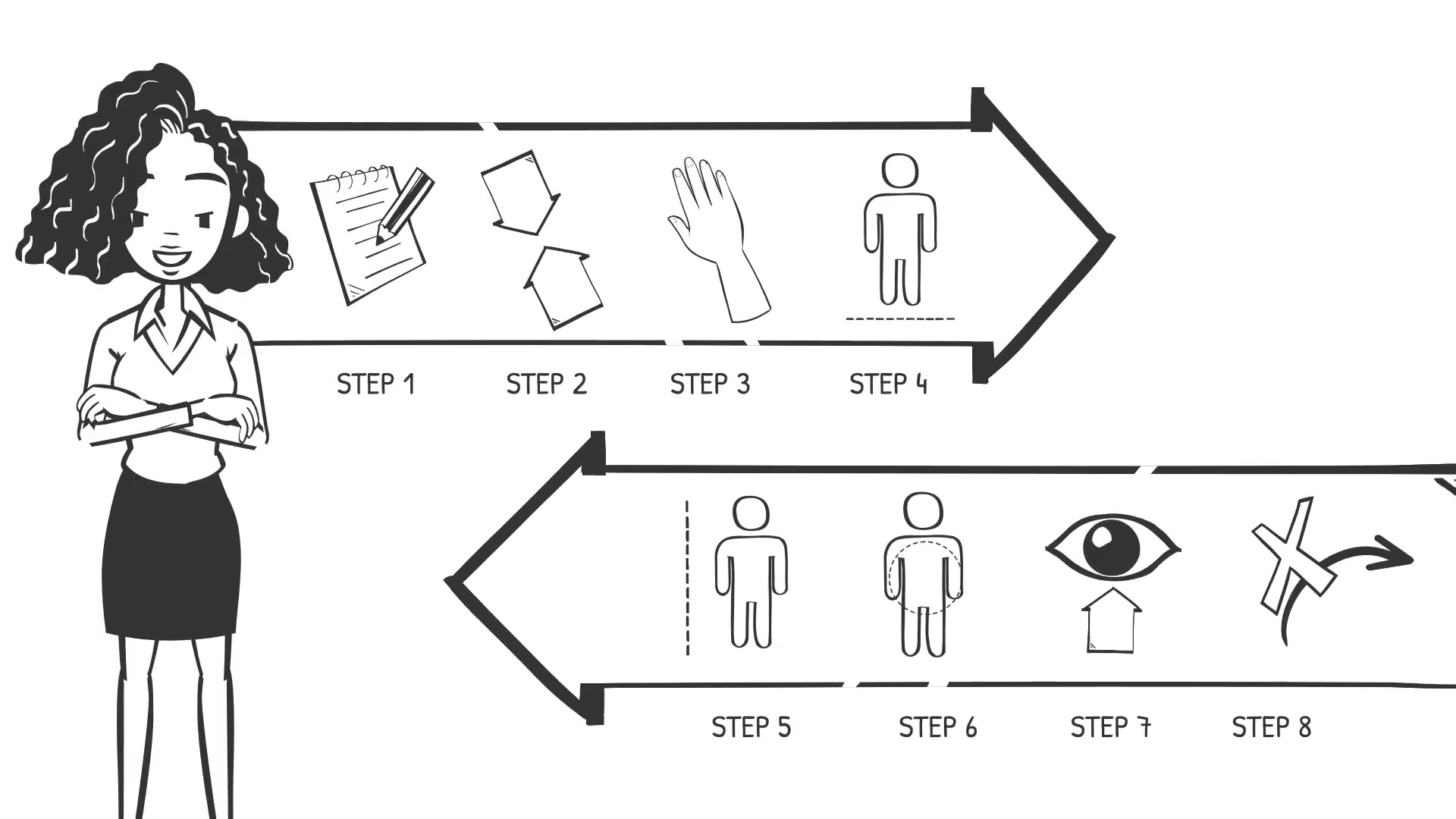
One of the most detailed parts of the film is the eight-step lifting technique. Each stage is introduced individually, beginning with planning the task and clearing the route before progressing through positioning, grip, balance and movement.
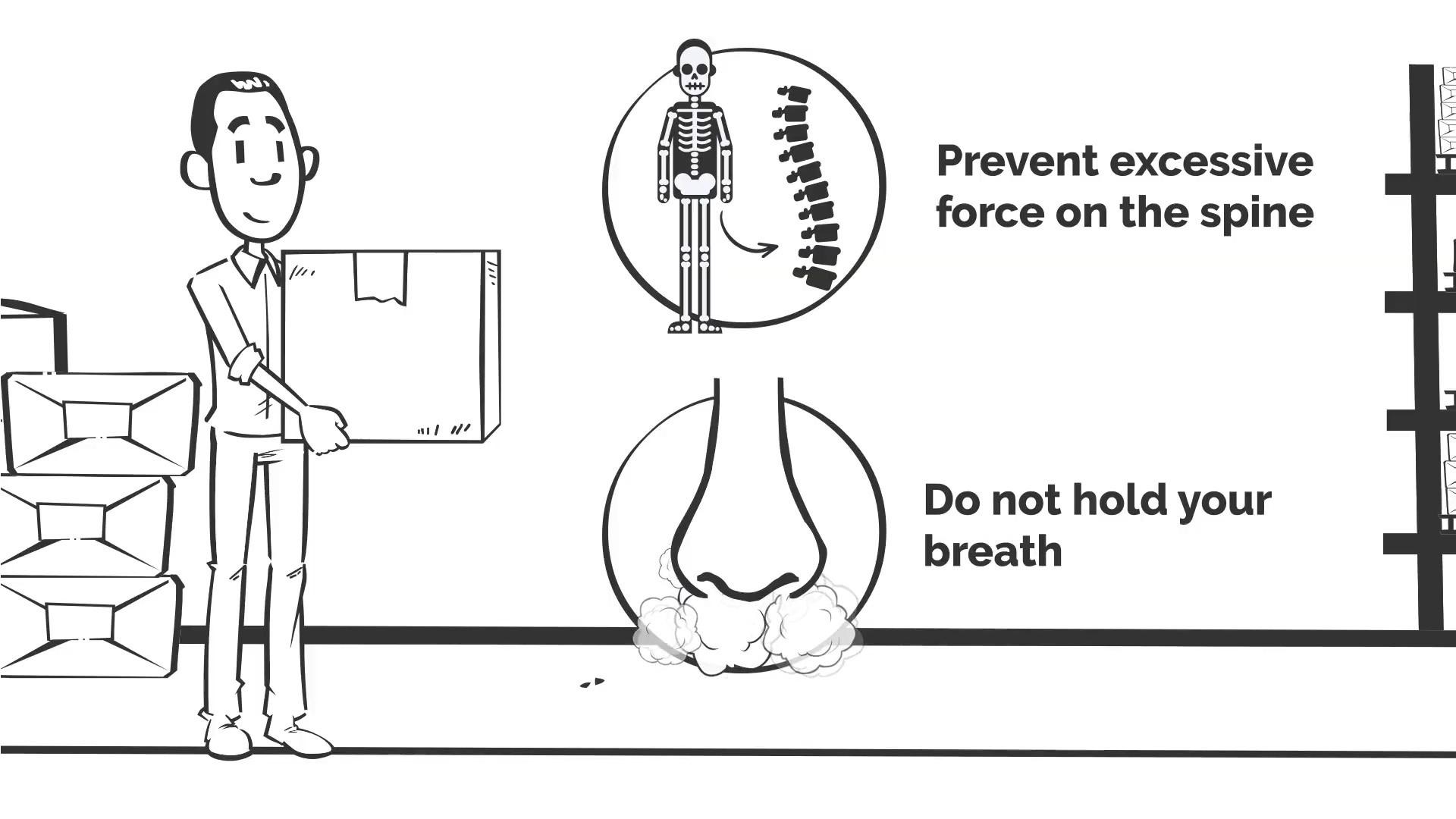
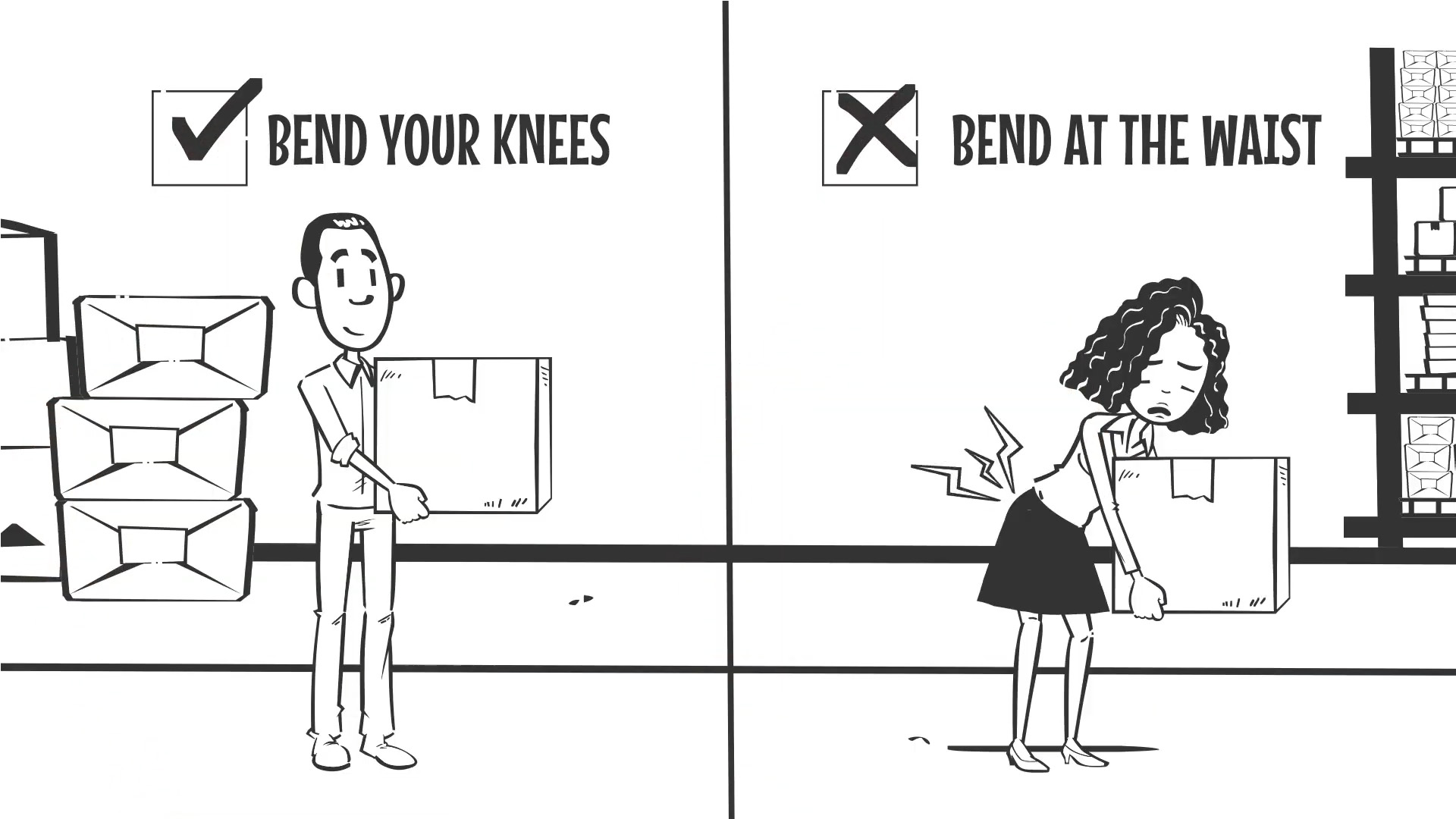
The animation demonstrates the importance of keeping an object close to the body, establishing a stable base, bending at the knees, tightening the stomach muscles and maintaining a straight back. It also reinforces the need to avoid twisting and to ask for assistance when a load is too heavy.
To help viewers retain the complete process, the individual actions are consolidated into a visual sequence. Icons, directional arrows and concise labels show how the steps connect, turning a detailed physical procedure into a practical reference that is easier to recall.
Demonstrating Safer Pushing and Pulling
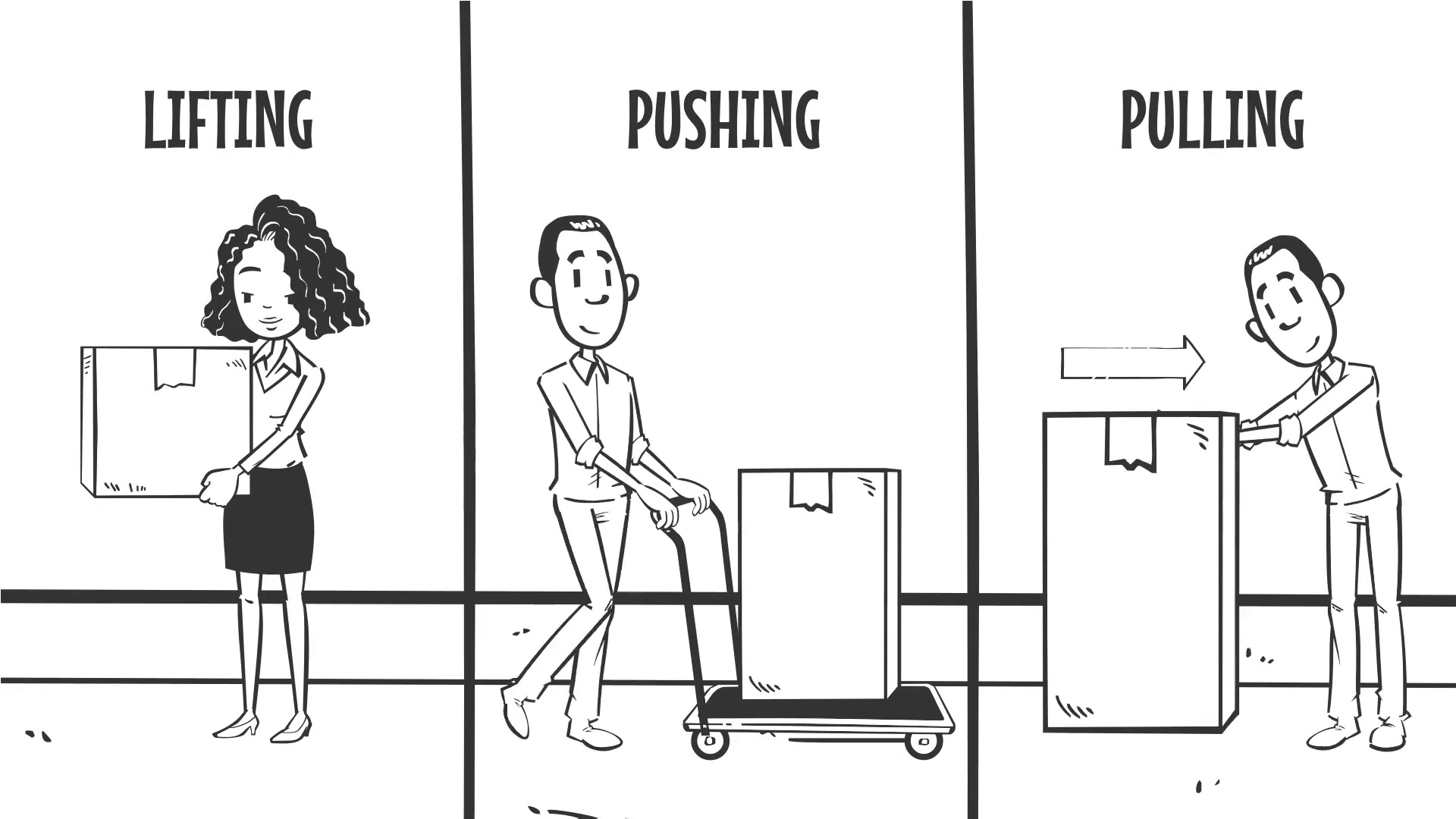
The video then addresses another common source of ergonomic strain: moving loads by pushing or pulling them. It explains why pushing is generally preferable, as it places less demand on the lower back and provides better visibility.
The technique is presented as a structured process. Workers are encouraged to assess the load and their own physical limitations, inspect wheels and floor surfaces, establish the correct body position and apply gradual force when starting or stopping the load.
Illustrated workplace scenarios reinforce the narration by showing the position of the hands, feet, shoulders and torso. This visual demonstration gives the viewer more than a verbal instruction; it provides a clear picture of what correct technique should look like in practice.
Explaining Poor Posture Through Recognisable Scenarios
Poor posture was divided into two categories: awkward posture and static exertion. The animation uses relatable characters to demonstrate overhead work, raised elbows, forward bending, neck flexion, squatting and kneeling.
Placing these postures side by side helps viewers recognise positions they may encounter in their own work. Static exertion is then explained as holding a position for an extended period, connecting the concept to the fatigue and reduced circulation that can result.
The video does not suggest that every awkward or static posture can be eliminated. Instead, it offers achievable preventative measures such as changing positions, taking regular breaks and stretching. This keeps the guidance realistic while giving workers actions they can incorporate into their daily routines.
Designing for a Diverse Workforce
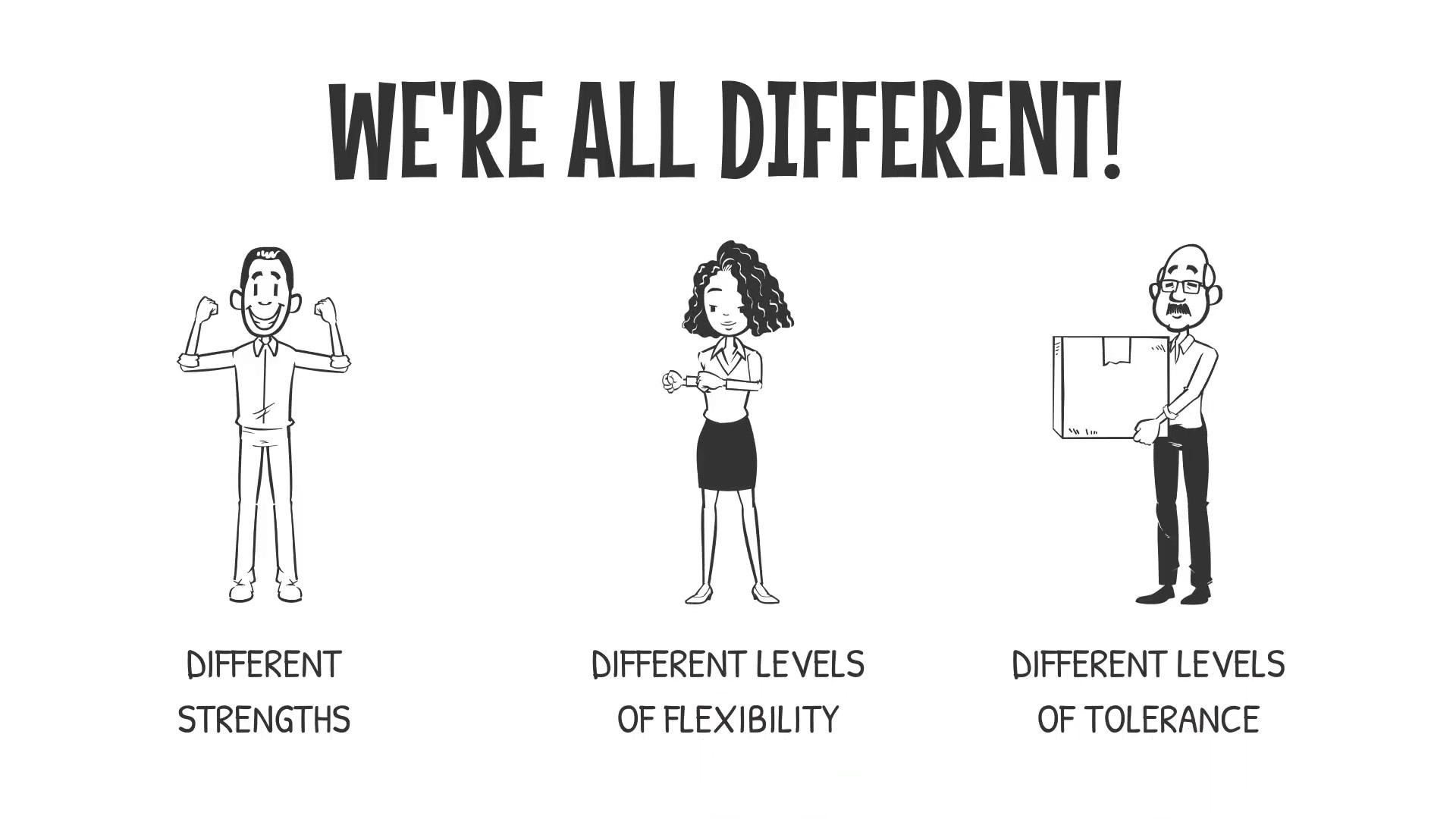
A central message of the film is that workers have different levels of strength, flexibility and physical tolerance. The character illustrations reflect this diversity and reinforce that safe work depends on recognising personal limitations rather than applying a single physical expectation to everyone.
This message gives the content a more considered and inclusive perspective. Asking for assistance, adjusting a technique or working within one’s limits is positioned as responsible safety behaviour rather than an inability to complete the task.
The film closes by reconnecting these individual decisions to the broader purpose of ergonomics: preventing overexertion, sprains and strains by adapting the way work is performed.
The Outcome: A Practical and Reusable Safety Resource
The completed ergonomics safety training animation transforms a technically detailed topic into a concise, structured learning experience.Through narrated explanations, progressive illustrations, recurring characters and step-by-step demonstrations, workers are shown how ergonomic hazards arise and what safer behaviour looks like.
Because the content is delivered through animation, the training is not dependent on access to a particular worksite, piece of equipment or filming environment. The video can be used as a consistent contractor training resource, incorporated into a wider induction programme or revisited when workers need to refresh their understanding of safe lifting, movement and posture.
Most importantly, the film moves beyond general warnings. It equips viewers with practical techniques they can apply when planning a lift, moving a load or recognising when a working position is placing unnecessary strain on the body.
Sound Idea Digital combines safety content development, visual storytelling, animation and digital learning expertise to make complex workplace guidance easier to understand and remember. If your organisation needs an ergonomics safety training animation or another form of workplace safety content, get in touch with our team to discuss a solution built around your workforce and operating environment.