

Scenario-Based Communication Training for Medical Equipment Technicians
Technical expertise is essential when maintaining medical equipment, but solving the mechanical problem is only part of a technician’s responsibility. Technicians must also gather accurate information, communicate with busy healthcare professionals and help clients understand the importance of correct reporting and preventative maintenance. Sound Idea Digital developed scenario-based communication training that turns these interpersonal challenges into practical lessons for medical equipment technicians. By placing communication principles within recognisable hospital situations, the video shows technicians not only what to do, but how their response can directly affect repair times, equipment availability and working relationships.
Translating communication principles into workplace behaviour
Communication training can easily become abstract when it relies on lists of rules or broad customer-service advice. The scenario-based communication training required a grounded approach that reflected the pressure, personalities and misunderstandings technicians may encounter in healthcare environments.
The content therefore focuses on three distinct communication challenges: responding to an incorrectly reported incident, explaining the importance of preventative maintenance and managing a difficult conversation with a senior healthcare professional.
Each scenario presents a believable problem, demonstrates its operational consequences and then guides the technician through a more effective response. This consistent structure makes the lessons easy to follow while connecting communication decisions to outcomes that matter in the workplace.
Showing why accurate incident reporting matters
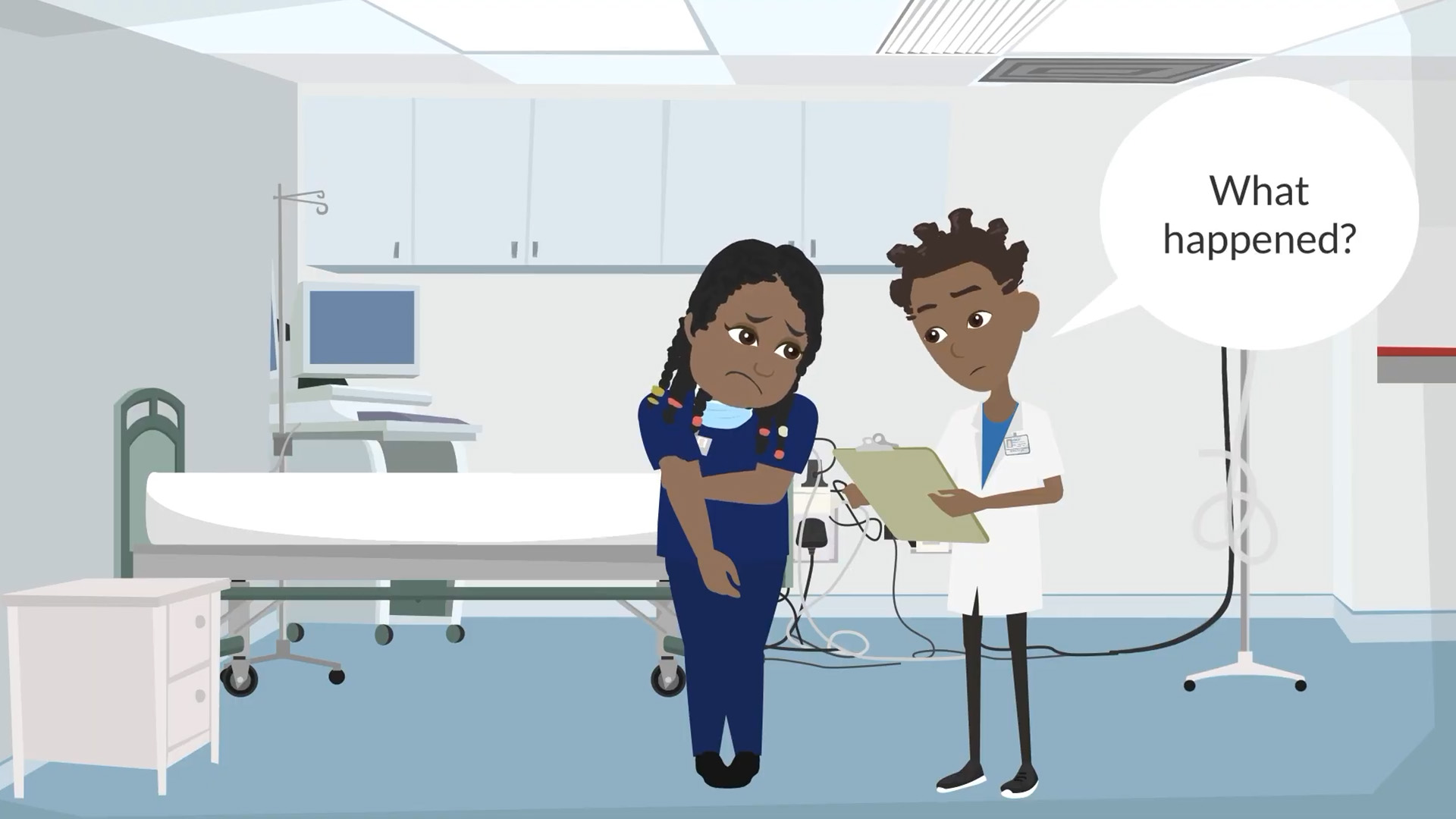
The first scenario follows Nurse Nancy, who trips over a power cord, disconnects a ventilator and spills fluid onto the equipment. Although the incident is urgent, she reports it by email rather than contacting a technician telephonically.
Because Technician Thabo is occupied with urgent telephone callouts, the email appears to be a lower-priority request and is only addressed the following morning. Nancy is also reluctant to explain exactly what happened because she fears being blamed. Without an honest account of the incident, Thabo must spend additional time diagnosing a fault that could have been identified more efficiently.
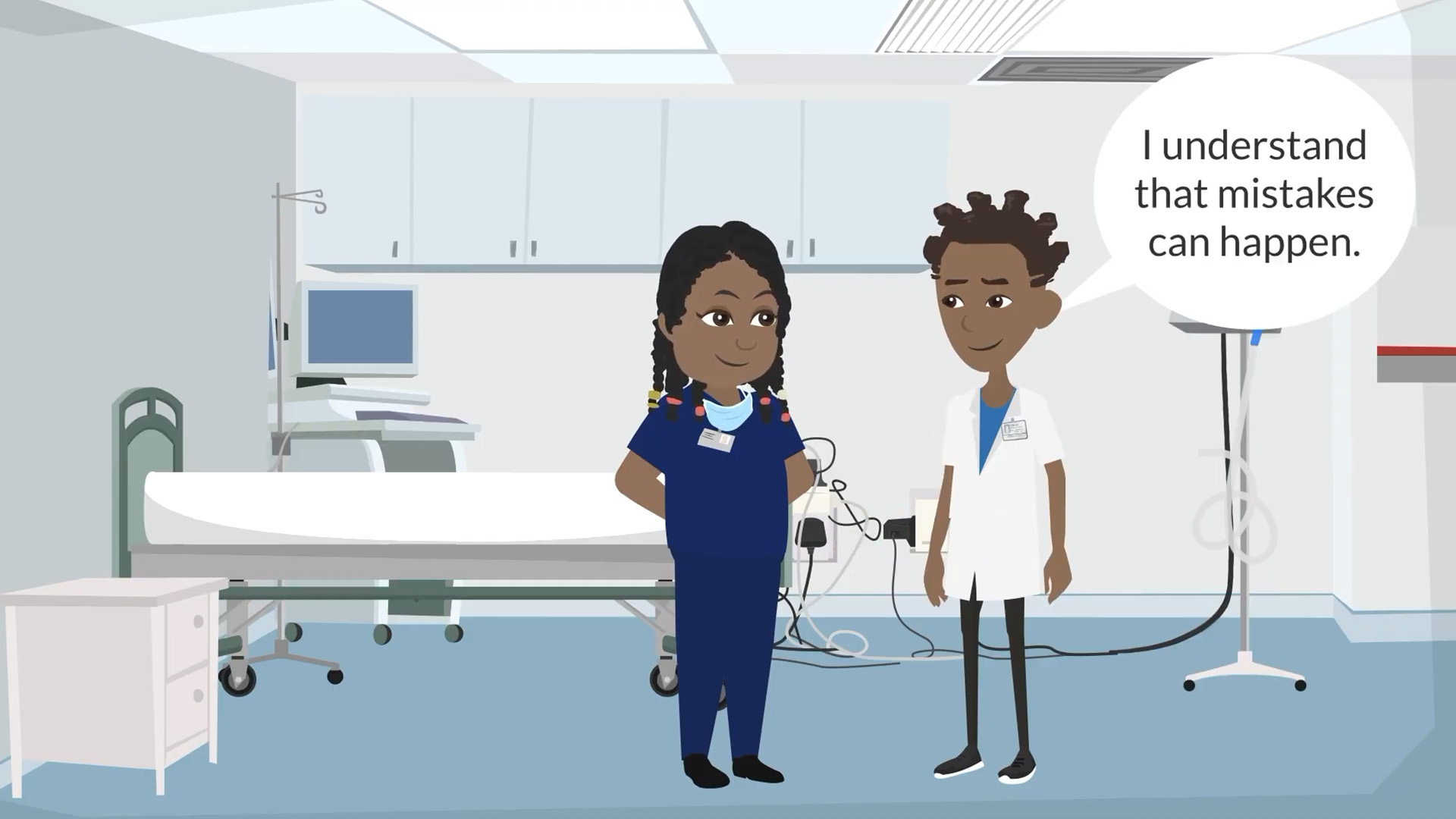
Rather than presenting Nancy as careless or uncooperative, the scenario recognises the human reaction behind her behaviour. Technicians are encouraged to explain the correct reporting channels, reassure staff members that mistakes happen and create an environment in which people feel able to provide complete and honest information.
This approach reinforces an important operational lesson: effective fault-finding often begins before a technician touches the equipment. The quality of the information provided can influence response time, diagnosis and the speed at which an essential machine is returned to service.
Making preventative maintenance personally relevant
The second scenario moves beyond the hospital environment to introduce Cabelo and his high-performance German sports car. Confident in the quality of the vehicle, he repeatedly ignores its prescribed servicing schedule until warning signs develop and the engine eventually fails.
The familiar analogy makes the principle of preventative maintenance immediately understandable. Regardless of how sophisticated or expensive a machine may be, its reliability still depends on regular inspection, servicing and responsible use.
The story then connects this lesson directly to medical equipment. Technicians are shown how to encourage clients to conduct daily visual inspections, report visible damage promptly and adhere to servicing schedules. The comparison helps them communicate maintenance as a practical investment rather than an unnecessary interruption.
By contrasting routine maintenance with the time and cost of a complete breakdown, the video gives technicians a clear way to explain preventative care to clients who may not fully appreciate its value.
Navigating difficult professional conversations
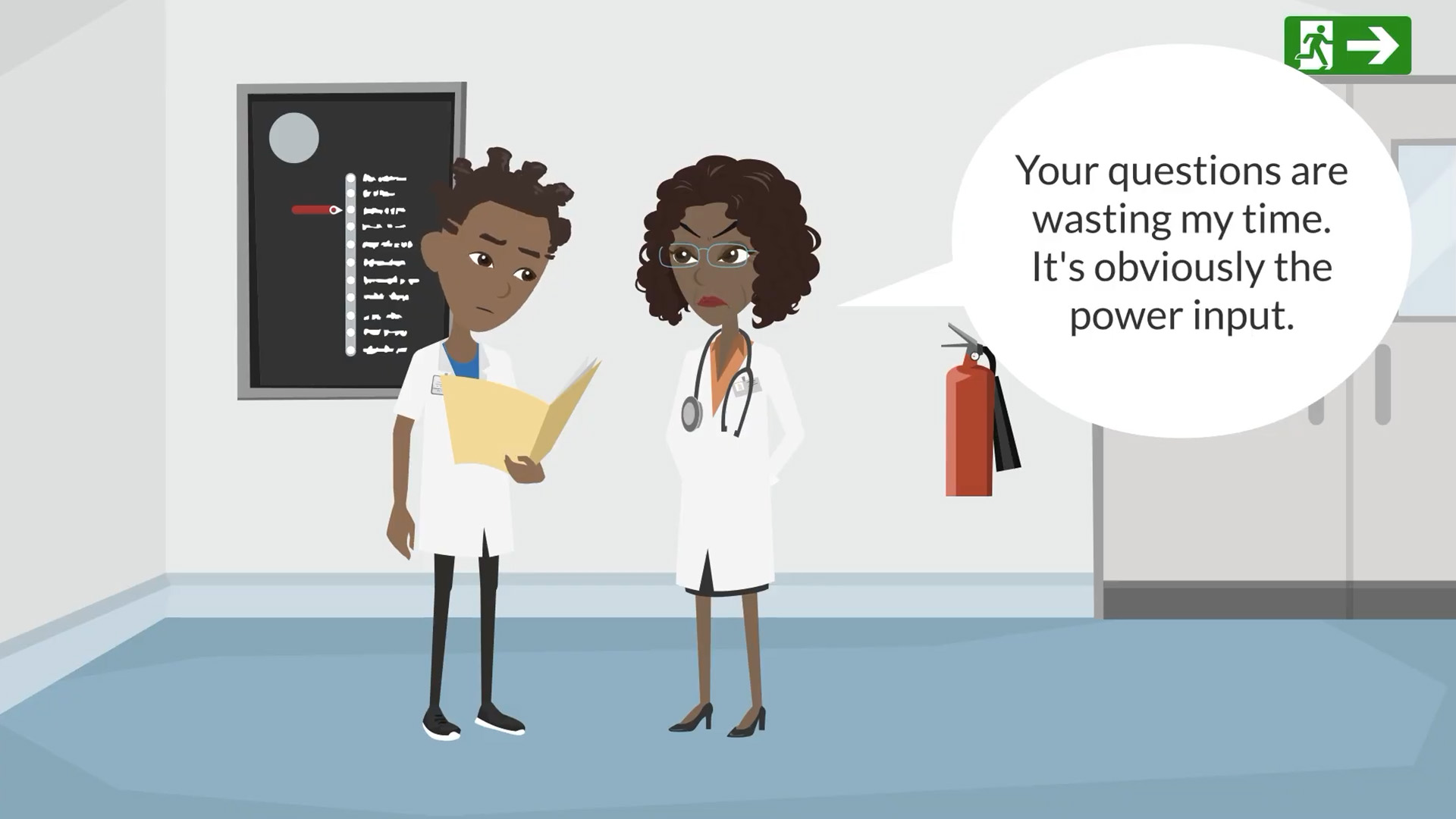
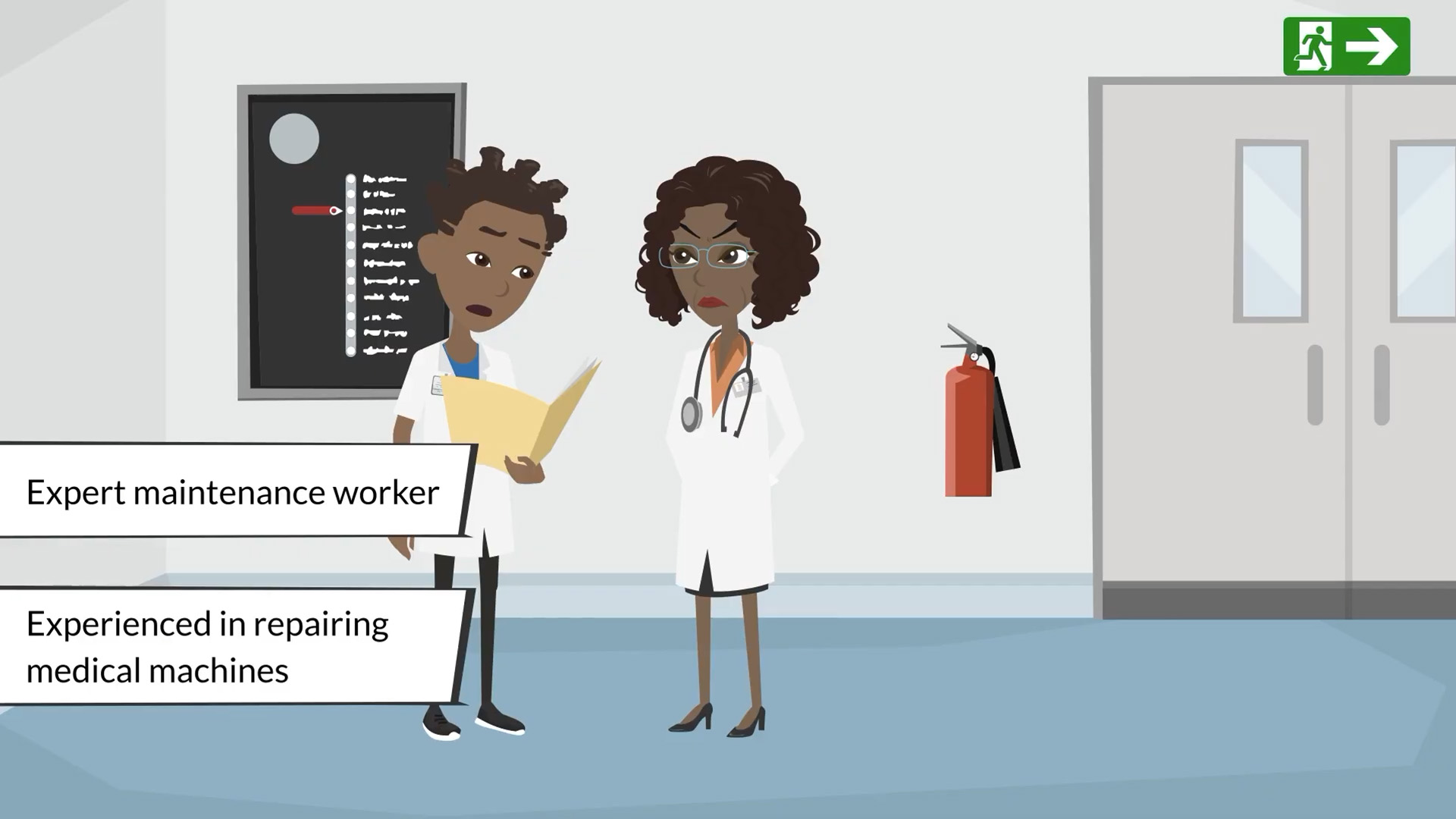
The final scenario explores a different kind of communication pressure. Dr Patel is an accomplished cardiologist with decades of experience, but when she encounters a problem with a ventilator, she dismisses Thabo’s diagnostic questions and insists that she already knows what caused the fault.
The interaction introduces a challenge technicians may face when working with highly qualified professionals: respecting another person’s authority while remaining confident in their own specialist knowledge.
Instead of encouraging confrontation, the video promotes a calm and constructive response. Technicians are advised to recognise the pressure under which healthcare professionals work, explain why their questions are necessary and show how cooperation can accelerate the repair. They are also encouraged to confirm their own qualifications and outline the steps they will follow to diagnose the problem.
This gives technicians a practical framework for maintaining professional boundaries without escalating the interaction. It reinforces that confidence and respect are not opposing behaviours; both are needed to resolve the immediate issue and preserve the working relationship.
A connected learning narrative
Although the three stories address different challenges, they are united by one central principle: technicians must help clients help them. This structure allows scenario-based communication training to address different workplace challenges while reinforcing one consistent message.
This message gives the video a strong narrative thread. It positions communication as a shared problem-solving tool that enables technicians to obtain better information, respond appropriately and complete repairs more efficiently.
The characters also allow the training to explore different emotional barriers without reducing the lesson to a set of instructions. Fear of blame, resistance to maintenance, professional pressure and misplaced confidence are presented as realistic factors that technicians must learn to navigate.
By pairing each challenge with specific actions, Sound Idea Digital transformed broad communication advice into observable workplace behaviour. Learners are not simply told to “communicate effectively”; they are shown how to respond, what to explain and why their approach matters.
Training designed for practical application
The completed video brings technical operations and interpersonal communication into the same learning experience. Its hospital-based scenarios make the content relevant to medical equipment environments, while the car-maintenance analogy provides an accessible way to explain a complex operational responsibility.
Most importantly, the project acknowledges that reliable equipment support depends on cooperation between technicians and healthcare professionals. Clear reporting assists diagnosis, honest information reduces wasted time, preventative maintenance protects equipment and respectful communication helps both parties work towards a faster resolution.
Through relatable characters, carefully structured scenarios and actionable guidance, Sound Idea Digital created a training resource that makes communication skills easier to understand, remember and apply. The project demonstrates how scenario-based communication training can turn everyday workplace friction into practical lessons that support stronger relationships and more efficient technical service.
Effective technical service depends on employees knowing how to communicate under pressure, not only how to repair equipment. Sound Idea Digital can develop relatable training scenarios that prepare your teams for incorrect incident reports, maintenance resistance and challenging professional interactions. Contact us to arrange a project discussion and explore how your real communication challenges can become valuable learning experiences.