

13 Elements of a Full-Service Safety Video Production Package
A well-planned full-service safety video production package helps organisations translate approved workplace procedures into practical visual instruction. It gives employees, contractors, visitors and supervisors a consistent explanation of the actions expected before they enter a site, use equipment or respond to an incident.
The need for clear safety communication is substantial. Globally compiled occupational safety estimates, based on 2019 data, recorded 395 million non-fatal work injuries and approximately 2.93 million work-related deaths in a year. Video does not replace risk assessments, supervision or hands-on training, but it can make critical information easier to understand, repeat and reinforce across a workforce.
1. A Defined Project Brief, Audience and Safety Objectives
Every safety video should start with a clear brief. This identifies who will watch it, such as new employees, contractors, visitors, supervisors or maintenance teams, and where it will be used. A site induction, a machinery procedure and an emergency response video have different learning needs, levels of detail and viewing environments.
The brief should also establish the workplace risks, required procedures and expected behavioural outcomes. For example, the objective may be to improve PPE compliance, clarify pedestrian routes, demonstrate a lockout procedure or explain how to report a hazard. Defined objectives prevent the production from becoming a broad list of safety rules without a clear practical purpose.
2. Documentation Review in a Full-Service Safety Video Production Package
A full-service safety video production package should begin with a review of the documents that govern how work is performed. These may include risk assessments, safe work procedures, standard operating procedures, incident records, emergency plans, PPE requirements, permits and local site rules.
This review ensures that the script is based on approved information rather than assumptions. It can also reveal where a procedure needs clarification before production begins, such as an updated evacuation point, a changed access route or new equipment. Addressing these details early protects the accuracy of the finished video and reduces avoidable revisions later.
- Risk assessments: Identify the hazards, controls and risk areas that the video should explain or reinforce.
- Standard operating procedures: Confirm the approved order of tasks, responsibilities and required precautions.
- Incident reports: Highlight recurring errors, near misses or misunderstandings that may require clearer visual training.
- PPE requirements: Check the correct protective equipment for each task, area or work condition shown in the video.
- Emergency plans and site rules: Verify evacuation arrangements, reporting routes, access restrictions and local safety requirements.
- Permits and specialist procedures: Establish whether particular tasks need additional approvals, isolation steps or controlled access.
Once these documents have been reviewed, the safety video can reflect the specific environment rather than relying on generic workplace examples. This helps viewers connect the training to the equipment, routes, rules and hazards they encounter during their own working day.
Document review also makes later approval more efficient. When the script is grounded in confirmed information from the outset, health and safety representatives can focus their feedback on accuracy and clarity instead of correcting fundamental details after filming or animation has already begun.
3. Clear Safety Video Scriptwriting
Safety video scriptwriting turns technical information into language and scenes that people can apply in the workplace. The script should make it clear what viewers must do, when they must do it and why the procedure matters. It should use direct wording without changing the technical meaning of an approved process.
A strong script combines narration, practical action, visual demonstrations and on-screen wording. Rather than simply stating that PPE is required, it can show the correct equipment, the point at which it must be worn and the specific task it protects. This approach is especially useful where employees need to remember a sequence of actions under time pressure.
4. Technical Input and Script Approval
Health and safety officers, operational managers, supervisors and subject specialists should review the script before filming starts. Their input helps confirm the correct terminology, PPE, equipment, action sequence, warning signs and escalation requirements for the relevant work area.
This approval stage is a key part of a full-service safety video production package because visual quality cannot compensate for an inaccurate instruction. A clear process should identify who has authority to approve technical content and consolidate feedback before production. This helps keep the message consistent and ensures that all scenes reflect current site practice.
- Health and safety officers: Review hazards, controls, emergency information and the safety accuracy of every instruction.
- Operational managers: Confirm that the process shown reflects how work is organised in the relevant department or site.
- Supervisors: Identify practical details, common errors and workplace conditions that should be shown clearly.
- Subject specialists: Check technical terminology, equipment operation, machinery safeguards and specialised procedures.
- Authorised approvers: Provide final confirmation that the script is ready for production and represents current requirements.
- Consolidated feedback: Combine comments into one clear set of instructions to avoid conflicting revisions and delays.
A formal approval stage protects both the organisation and the effectiveness of the finished video. It creates a shared understanding of what will be shown before the team enters a live work environment or begins developing detailed animation.
It also prevents the production from relying on informal assumptions. When technical stakeholders have signed off the script, the filming and animation process can move forward with greater confidence that the instructions are accurate, practical and relevant to the intended audience.
5. Creative Treatment and Storyboarding
The creative treatment establishes how the safety message will be presented. It may use live-action demonstrations, animation, workplace scenarios, graphics, a presenter, voice-over or a combination of formats. The choice should be guided by the complexity of the procedure and the needs of the intended audience.
Storyboarding then maps the planned video scene by scene. It shows the action, narration, on-screen labels, visual warnings and transitions before production begins. This allows technical reviewers to see how an instruction will appear on screen, while allowing the production team to plan filming efficiently and avoid unnecessary disruption at the workplace.
6. Live-Action Filming for a Full-Service Safety Video Production Package
Live-action filming is valuable when workplace familiarity helps viewers understand the instruction. Seeing actual facilities, access points, machinery, vehicle routes and approved working practices can make training more recognisable for employees who use those environments every day.
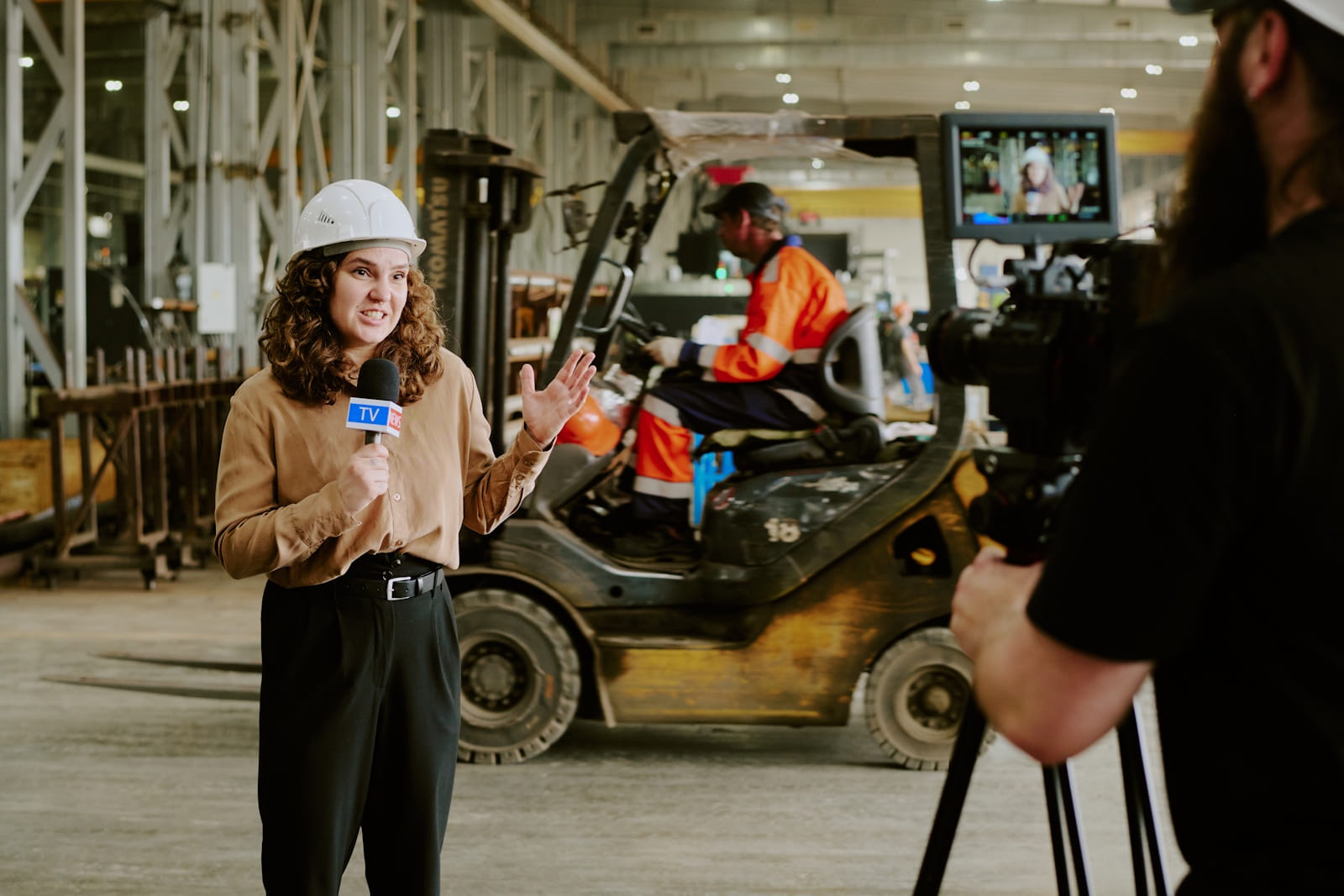
Within a full-service safety video production package, filming must be planned with the same care as the content itself. The crew should follow site induction requirements, wear appropriate PPE, respect operational constraints and avoid creating additional hazards. Every person demonstrating a procedure should be competent and should perform the approved action correctly.
- Site inductions and access requirements: Ensure the crew understands site rules, restricted areas, emergency procedures and the required PPE before filming.
- Location planning: Identify the facilities, equipment, work areas and access points that will make the training relevant to viewers.
- Competent demonstrators: Use people who understand the approved procedure and can perform each action correctly on camera.
- Safe filming controls: Plan camera positions and crew movement so that production does not interfere with plant, vehicles or active tasks.
- Real workplace demonstrations: Capture familiar actions, equipment checks and site practices that employees need to recognise.
- Operational coordination: Schedule filming around working requirements so safety communication can be created without unnecessary disruption.
Careful coordination allows the finished video to feel authentic without compromising daily operations. It also helps prevent avoidable reshoots, as the necessary equipment, people and work areas can be prepared before the crew arrives on site.
Live-action production should always reinforce the approved standard. If an action cannot be filmed safely or clearly in the real environment, animation, graphics or a controlled demonstration may provide a more suitable way to communicate the information.
7. Animation, Graphics and Visual Explanations
Some safety messages cannot be filmed safely or clearly. Animation can show internal machinery, exclusion zones, invisible hazards, technical processes and potential incidents that would be unsafe, impractical or disruptive to recreate through live-action filming.
2D animation is useful for simple procedures, characters and step-by-step sequences. 3D animation can add clarity where viewers need to understand equipment components or spatial risks. Motion graphics, labels, arrows and warning symbols can also direct attention to the details that employees must notice before beginning work.
8. Professional Voice-Over and Sound Production
Professional narration should be clear, measured and suited to the workforce and the seriousness of the subject matter. It needs to support the visuals, not compete with them. Important actions should be spoken in a way that gives viewers enough time to follow the demonstration and absorb the instruction.
Good audio production forms part of a full-service safety video production package because a message can be lost if dialogue is unclear or background music is too prominent. Sound levels, voice-over, effects and music should be mixed carefully so that the final video works in a training room, on a laptop or through an internal learning platform.
9. Editing, Graphics and Accessibility Features
Editing gives the safety video a logical structure and a pace that supports understanding. It should allow time for viewers to see each step, identify the risk and recognise the correct behaviour. Fast editing may look energetic, but it can make complex procedures harder to retain.
Clear graphics can improve comprehension without overcrowding the screen. On-screen labels, warning symbols, arrows, captions and text prompts can reinforce important actions and support employees who are watching without audio. These features are particularly useful when the video includes unfamiliar equipment, technical terms or several steps that must be completed in order.
- Clear pacing: Allow enough time for viewers to see, understand and remember each stage of a procedure.
- Branded graphics: Apply consistent visual elements that support the organisation’s training and internal communication materials.
- Captions and subtitles: Provide written support for narration and key instructions where required.
- Warning labels and visual cues: Use arrows, icons and call-outs to direct attention to hazards, PPE and critical actions.
- Readable on-screen wording: Keep text concise, visible and placed where it does not obscure important demonstrations.
- Focused final edits: Remove unnecessary footage so the video remains relevant, practical and easy to revisit.
These features help turn a filmed or animated sequence into a clearer training resource. When viewers can hear, see and read important information, they are better able to understand the instruction and connect it to the task in front of them.
A carefully edited safety video can also be more useful over time. Clear sections, recognisable visual cues and focused messaging make it easier for supervisors to return to particular topics during refresher training, inductions or toolbox talks.
10. Multilingual Versions in a Full-Service Safety Video Production Package
Where a workforce includes people with different language preferences, multilingual options can make critical safety content more accessible. Depending on the audience, this may include translated narration, subtitles or separate versions of the same video for different groups.
A full-service safety video production package should treat translated material as safety content, not merely a final add-on. The wording should preserve the meaning of the approved process, warnings and emergency instructions. Authorised technical reviewers should approve each language version before release, particularly where a small wording change could affect how viewers understand an action.
11. Client Review, Revisions and Final Approval
A structured review process gives authorised representatives the opportunity to check the script, storyboard, rough cut and final version. At each stage, reviewers can assess operational accuracy, visual detail, language, branding and whether the content reflects current workplace requirements.
Feedback should be consolidated through agreed client representatives. This avoids contradictory comments and makes revisions easier to manage. Formal final approval also creates a clear record of the version released for training, which is helpful when a procedure later changes or a site needs to confirm which material was in use.
- Script review: Confirm that wording, sequence and technical content reflect approved procedures before production.
- Storyboard review: Check how each instruction, demonstration and visual warning will appear on screen.
- Rough-cut review: Assess the first edited version for clarity, pacing, technical accuracy and visual detail.
- Revision management: Record feedback clearly and apply agreed changes in a controlled manner.
- Language and accessibility checks: Confirm subtitles, translated narration and on-screen text before final release.
- Final sign-off: Obtain approval from authorised representatives before the video is used for training or induction.
A structured review process helps the client retain control of technical accuracy while allowing the production team to manage the creative and practical elements of the project. It also gives every reviewer a clear opportunity to raise important concerns at the right stage.
Keeping approval records is useful when content must later be updated. It makes it easier to identify the version that was released, the people who approved it and the procedure or site information that the video was designed to support.
12. Delivery for Induction, Training and Internal Platforms
The completed video should be supplied in practical formats for the ways it will be used. This may include new employee inductions, contractor briefings, toolbox talks, internal communication channels, learning platforms and site display screens. Delivery requirements should be discussed before production begins.
A properly scoped full-service safety video production package can also include shorter topic-specific edits. A longer induction video may be supported by brief clips focused on PPE, reporting, emergency response or visitor conduct. These shorter assets give supervisors a practical way to reinforce key messages throughout the year.
13. Version Control and Future Updates
Safety information can change when a business introduces new equipment, updates PPE requirements, alters emergency arrangements or revises site rules. A safety video should therefore be treated as a controlled training asset, not a one-off piece of content that cannot be maintained.
Keeping approved scripts, source footage, graphics, language versions and final files organised makes future updates more manageable. If the production has been planned carefully, a changed scene, contact detail or instruction can be updated without recreating the entire video. This helps organisations keep safety communication relevant as operations develop.
Best Safety Video Production Companies That Include Scriptwriting and Animation in South Africa
Sound Idea Video Production is a great safety video production company that includes scriptwriting and animation in South Africa. We create safety induction videos through live-action filming, 2D animation, 3D animation or a blend of formats, allowing the production approach to match the training requirement. Our services cover risk assessment videos, emergency response training videos, safety induction videos, compliance training videos, toolbox talk videos, multilingual content, PPE and equipment handling videos, and more.
Our 3D animation integration is particularly valuable for high-risk or complex scenarios that cannot be recreated safely through filming. We can integrate 3D animation into live-action footage or create fully animated accident recreations to help employees visualise hazards, machinery, exclusion zones and correct responses. By combining clear scriptwriting with practical live-action demonstrations, graphics and animation, we help translate complex safety protocols into straightforward, actionable guidance for workplaces across a range of industries.
- Safety induction videos: Create practical induction content for new employees, contractors and visitors entering a workplace.
- Risk assessment videos: Show potential hazards, workplace risks and preventive measures in a clear visual format.
- Emergency response training videos: Demonstrate emergency procedures through live-action footage, animation or a combination of both.
- Compliance training videos: Present workplace regulations, standards and safety expectations in an accessible training format.
- Toolbox talk videos: Produce focused content that reinforces daily safety practices and specific workplace topics.
- Multilingual capabilities: Provide safety video content in multiple languages to support understanding across diverse workforces.
- PPE and equipment handling videos: Demonstrate the correct use, maintenance and inspection of PPE and machinery.
- 3D animation integration: Use 3D animation within live-action footage or fully animated accident recreations to explain high-risk scenarios safely.
Our 3D animation integration is especially useful where live-action filming alone cannot show the full risk or process clearly. Animation can help employees visualise what happens inside equipment, how a hazard develops or why an exclusion zone must be respected, without placing anyone in a dangerous situation for the purpose of production.
By combining scriptwriting, live-action production, 2D and 3D animation, graphics, multilingual content and structured client review, we can build safety videos around the needs of the workplace. This allows organisations to communicate complex protocols in a format that is practical, professional and easier for employees to follow.
Build a Safety Video That Supports Real Workplace Understanding
A full-service safety video production package should combine approved safety information, clear scriptwriting, thoughtful creative planning, professional production and a reliable review process. The result should give people a practical understanding of what safe work looks like in their own environment.
At Sound Idea Video Production, we create tailored safety video content that helps organisations communicate procedures clearly and consistently. Contact us to discuss how we can develop a full-service safety video production package for your inductions, workforce training or internal safety communication.
FAQs
What does full-service safety video production include?
A full-service safety video production project covers the complete process of creating workplace safety content, from the initial brief to final delivery. It normally includes reviewing approved procedures and risk information, writing the script, planning visuals, filming live-action footage, producing animation where needed, recording voice-over, editing, captions, client review and final file delivery. The purpose is to create an accurate, engaging training resource rather than isolated footage. A strong production process keeps approvals organised and supports future updates when equipment, PPE, emergency arrangements or operating procedures change. The video can be used for inductions, training, toolbox talks or communication.
How is safety video scriptwriting checked for accuracy?
Safety video scriptwriting converts approved technical material into clear scenes, narration and on-screen instructions. A production team should work from current risk assessments, operating procedures, emergency plans, PPE requirements and site rules, then submit the script for technical review. Health and safety representatives, operational managers and relevant specialists can check wording, action sequences, equipment and warnings before filming begins. This approval step is important because polished footage cannot correct inaccurate instruction. Once the script is approved, it provides a reliable blueprint for filming, animation, voice-over and editing, helping the final video remain fully consistent with the organisation’s current safety requirements.
When should a safety video use 3D animation?
3D animation is most useful when a safety message cannot be filmed safely, clearly or without disrupting operations. It can show internal machinery, the movement of vehicles, exclusion zones, confined spaces, chemical exposure pathways or the consequences of an unsafe action without recreating a real incident. It can also explain spatial relationships that are difficult to capture with a camera. The animation should be based on approved technical information and reviewed by people who understand the procedure. Used alongside live-action footage, 3D animation can show both the workplace and the hazards or processes that may not be visible during operations.
Can full-service safety video production include multiple languages?
Multilingual safety videos can help organisations communicate essential procedures more clearly to workforces with different language preferences. Depending on the audience, the project may use translated voice-over, subtitles or separate language versions. Translation should not be handled as a simple word-for-word exercise, particularly when the video covers emergency action, hazardous equipment or specific PPE requirements. Each version should retain the meaning and urgency of the approved source script. Relevant technical reviewers should check translated terms, visual labels and captions before release. This helps make sure that all viewers receive consistent instructions, regardless of the language version they watch during training sessions.
How many client review stages should a safety video have?
Client review stages usually occur after the script, storyboard and first edited version have been prepared. The exact number of rounds should be agreed before production starts, together with the people authorised to provide feedback. Early review is valuable because it identifies technical errors before filming, animation or final post-production becomes expensive to change. A rough-cut review then allows clients to assess pacing, visual accuracy, narration, captions and branded graphics in context. Final approval should confirm that the safety message is correct, current and suitable for release. Keeping a record of approved versions also makes future revisions easier to manage.