

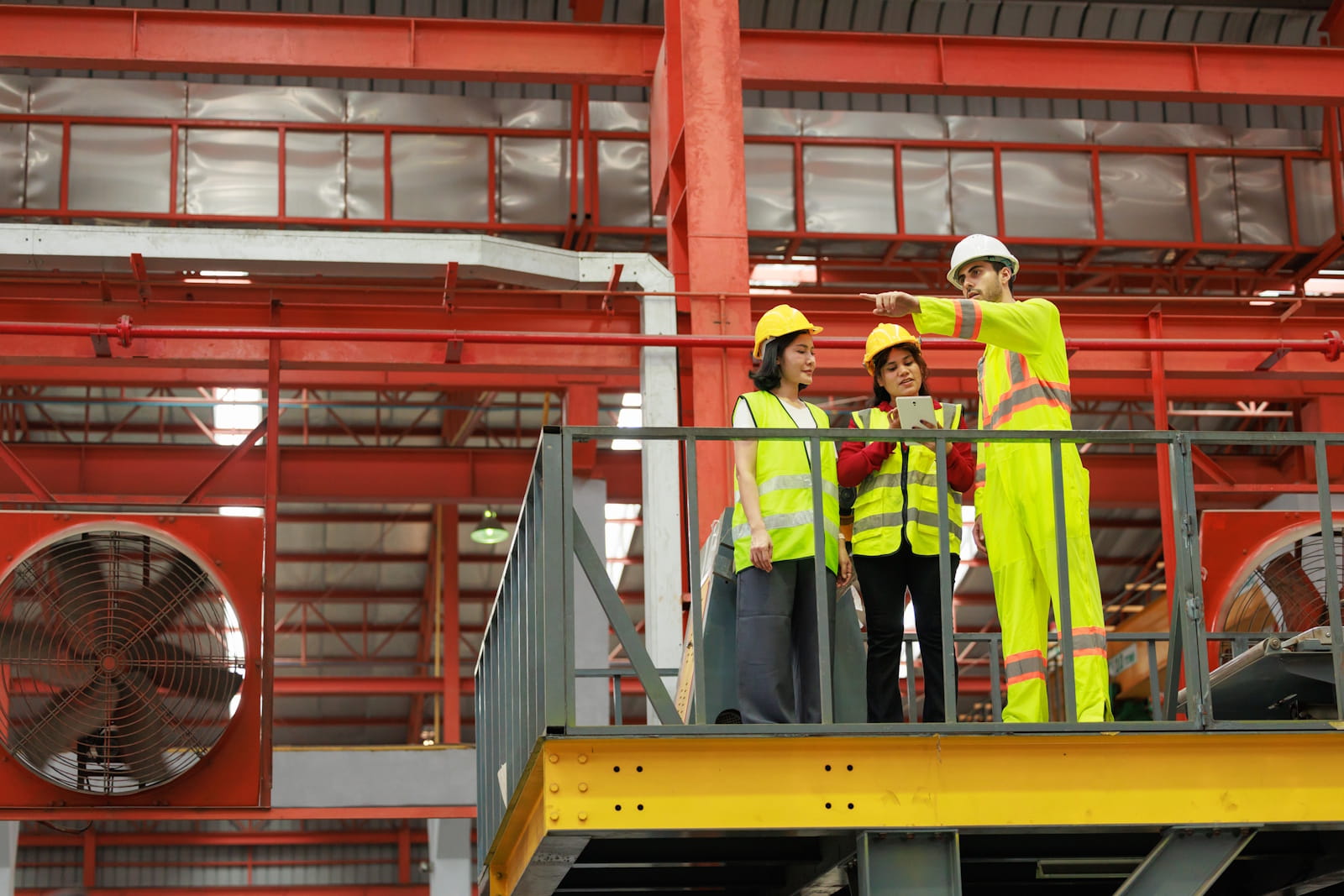
How Industrial Clients Can Protect Confidential Processes
Industrial safety video production can create a difficult balance. Real footage makes procedures easier to recognise and follow, yet how industrial clients can protect confidential processes must be considered before a camera enters the facility. A safety demonstration can unintentionally capture production methods, live screens, site layouts, access controls or information about employees and customers.
The risk is not limited to highly specialised factories. A loading area, laboratory, workshop, warehouse or control room may contain details that are commercially sensitive, operationally restricted or personal. Strong planning allows a business to create credible safety training that reflects the workplace without revealing information that should remain internal.
Why Confidentiality Matters When Filming Industrial Safety Videos
A camera records more than the intended action. A wide shot can show how equipment is positioned, where materials are stored or how people move through a site. A close-up may reveal settings, serial numbers, labels, technical specifications or internal documentation. This is why how industrial clients can protect confidential processes needs to be part of the production brief rather than an issue considered only during editing.
Confidentiality is also closely connected to safety. If employees are distracted by a filming crew, if the crew enters restricted areas, or if an unsafe shortcut is staged for the camera, the production itself can create unnecessary risk. A professional safety video should show approved behaviour, use suitable locations and be planned around the realities of an active industrial site.
The types of information that need protection will differ between facilities, but certain risks are common across industrial environments:
- Proprietary processes: Manufacturing methods, formulas, production stages and technical operating practices may give a business a competitive advantage.
- Equipment information: Machinery configurations, settings, serial numbers, specialist tools and control panels can reveal more than intended.
- Site layout and security: Access gates, camera positions, alarm controls, storage locations and internal routes may be security-sensitive.
- Commercial information: Customer names, delivery records, project details, production targets and supplier information can appear on paperwork or screens.
- Personal information: Faces, staff identification, visitor records, vehicle registrations and internal contact details can be captured accidentally.
Confidentiality is therefore not simply about preventing a camera from entering a restricted room. It requires an awareness of every item that may appear in the frame, including information in the distance or behind the main subject. A professional production plan gives each filming location a purpose and avoids capturing unnecessary footage that creates additional review and editing work.
When confidentiality is addressed properly, it supports the overall quality of the safety video. Employees can focus on the correct action, while the business can be confident that the production reflects its professional standards. The result is content that is informative and usable without creating avoidable operational, privacy or security concerns.
Identify Restricted Areas Before Production Begins
A pre-production site walk-through gives the business a chance to define where filming may take place. The site team should identify restricted zones, control rooms, laboratories, live production lines, technical storage areas, security-sensitive spaces and locations where sensitive paperwork or systems are likely to be visible. It is much easier to prevent a problem at this stage than to remove it after filming.
The most practical approach is to divide the facility into approved, controlled and restricted areas. Approved areas may be filmed normally within site rules. Controlled areas may need an escort, specific camera angles or limited access. Restricted areas should not be filmed at all. When how industrial clients can protect confidential processes is considered at this stage, the crew can prepare suitable alternatives before production starts.
Review the Script, Storyboard and Shot List
The script should explain the safety message clearly, while the storyboard and shot list should show exactly how that message will be captured. These documents need review from the people who understand the site best. Operations personnel can identify process information that should remain private, while safety representatives can confirm that each demonstration reflects approved procedures.
This review should include computer screens, control panels, technical labels, whiteboards, production schedules, access points, documents and background activity. A planned scene may be useful for training but still unsuitable if it exposes a live dashboard or specialist equipment configuration. By reviewing every planned image in advance, how industrial clients can protect confidential processes becomes a manageable production task rather than an expensive editing problem.
Control Access for the Production Crew
A production crew should be managed as a controlled group of site visitors. Before filming begins, crew members may need to complete visitor induction requirements, wear the correct PPE and follow rules for movement, photography and equipment use. These controls help the crew work safely and help the site retain oversight of where filming takes place.
An authorised escort is especially valuable in active industrial environments. The escort can guide the crew along approved routes, stop filming if a confidential detail appears and ensure that the team does not interfere with ongoing operations. The occupational health and safety framework in South Africa places importance on protecting people at work and people affected by work activities, including those involving plant and machinery.
A defined access plan makes it easier for both the industrial client and production crew to understand their responsibilities throughout the filming day:
- Visitor induction: Crew members should complete the required site induction before entering operational areas.
- PPE requirements: The crew should wear the equipment required for the location, including any additional protection needed for a specific task or zone.
- Designated routes: Filming should follow approved access routes rather than allowing the crew to move independently through the facility.
- Site escorts: An authorised representative can supervise access and identify sensitive or unsafe changes in the environment.
- Filming permissions: The crew should only record locations, people and activities that have been approved in the filming plan.
Access controls should remain in place even when a production crew has worked at the facility before. Working conditions, site layouts and operational priorities can change, meaning a previously suitable area may now contain sensitive activity or present a different safety risk. A short confirmation before filming each location helps avoid assumptions.
Careful access management also helps the crew work more efficiently. Instead of losing time waiting for approvals or relocating after discovering a restriction, the team can move between prepared locations with clear guidance. This keeps filming focused on the intended safety content and reduces disruption to employees carrying out their normal work.
How Industrial Clients Can Protect Confidential Processes During Live Filming
During filming, the emphasis should stay on the safe action rather than the entire operation. A close-up of hands applying a lockout device can explain a procedure without revealing the machinery layout around it. A carefully framed shot of an employee checking PPE can be more useful for learning than a wide view of the complete facility.
Before each scene, the site contact should carry out a quick visual check. Documents can be removed, whiteboards covered, screens locked, unnecessary labels concealed and personal items cleared from view. In practical terms, how industrial clients can protect confidential processes often comes down to these small checks, repeated consistently across the filming day.
Practical filming choices can protect sensitive information while keeping the procedure accurate and easy for employees to understand:
- Use close-up demonstrations: Frame the action being taught, such as inspecting PPE or applying an isolation device, rather than showing an entire operating area.
- Choose neutral backgrounds: Use a prepared area where possible to prevent confidential equipment, documents or people from appearing behind the demonstration.
- Avoid live systems: Do not record screens, dashboards or control panels displaying current operational information unless they have been specifically approved.
- Remove unnecessary details: Clear desks, cover whiteboards and remove documents before cameras are set up.
- Pause for site changes: Stop filming if an unexpected delivery, visitor, document or operational activity could enter the frame.
The camera team should not be expected to make confidentiality decisions alone. The production crew may be experienced in framing and lighting, but site personnel understand the meaning of technical information, processes and equipment. Maintaining communication throughout the filming day allows the right person to confirm whether a scene remains suitable.
The same principle applies when footage is reviewed. A shot that appears harmless at normal speed may reveal information when paused or enlarged. Reviewing footage carefully before it moves into the next stage of editing gives the business an opportunity to identify issues early and decide whether a section should be removed, cropped, blurred or replaced.
Keep Personal Information Out of the Footage
Personal information can appear in footage even when no interview is planned. Names on badges, staff lists, vehicle registrations, visitor books, job cards and paperwork may all be visible in the background. Faces can also identify employees, contractors or visitors who have not been selected to appear in the video.
The latest annual privacy reporting recorded 2,374 security-compromise notifications in a single financial year, with the reported total increasing by 37% from the previous year. These figures reinforce the need to treat captured footage as information that needs proper control. When deciding how industrial clients can protect confidential processes, the filming plan should also address who may be filmed, what needs to be blurred and how review versions will be shared.
Use Animation and Controlled Visuals Where Needed
Some procedures can be explained more safely and more confidentially without filming the real workplace. Animation, motion graphics, recreated settings and tightly framed demonstrations can show a hazard, sequence or emergency response without revealing operational methods, security arrangements or sensitive parts of the site.
This option is useful where a real demonstration would disrupt production, require an unsafe scenario to be staged or expose details that competitors should not see. Controlled visuals can focus attention on the decision that matters, such as when to stop work, how to report a hazard or which protective equipment is required. This is often one of the most effective ways to address how industrial clients can protect confidential processes without reducing the value of the training.
Manage Screens, Documents and Background Details
Background details are among the most common sources of accidental disclosure. A whiteboard may contain production targets, a desk may hold customer documentation, or a computer monitor may show internal systems. Details that seem unreadable on a camera monitor can become clear when footage is paused, enlarged or viewed on a larger screen.
A simple clear-screen, clear-desk and clear-wall routine should be used before filming begins. The team should also inspect each location from the camera’s perspective, not only from where people are standing. Good production practice recognises that how industrial clients can protect confidential processes depends on managing the whole frame, not only the employee performing the safety demonstration.
Agree Confidentiality, Ownership and Permissions
Confidentiality expectations should be written into the production agreement. The agreement should define what information is confidential, who may access the site, whether subcontractors may be involved, how files will be stored and what must happen to raw footage once the project is complete.
Ownership terms are equally important. The client should know who owns the raw footage, project files, graphics and final video, as well as whether any part of the production may be used outside the agreed training purpose. Clear written permissions help ensure that how industrial clients can protect confidential processes remains consistent from the first planning meeting through to final distribution.
A clear agreement should set practical expectations for everyone involved in the project:
- Confidentiality obligations: Define the information, locations and processes that must not be disclosed or used outside the project.
- Access to footage: Specify who may view raw footage, rough edits, final videos and project files.
- Storage requirements: Confirm where files will be stored, how access will be controlled and how long material will be retained.
- Ownership of deliverables: Clarify ownership of the raw footage, edited versions, graphics and final approved video.
- Use beyond the project: State whether footage may be used in a portfolio, showreel, case study or promotional material, and require written approval where necessary.
Written terms are valuable because they reduce uncertainty before a problem occurs. They also provide a useful point of reference when personnel change, when additional training versions are requested or when the client needs to revisit how the material may be used. Clear boundaries support a smoother working relationship throughout production.
Permissions should be reviewed when the intended use of the safety video changes. A version created for an internal induction programme may not be appropriate for contractors, external visitors or public channels without further approval. Considering the audience at each stage helps protect the business while ensuring that the right people receive the right safety information.
Build a Structured Review and Approval Process
A final video should not be approved by one person alone. Different reviewers notice different risks. Operations personnel can identify sensitive process detail, safety representatives can check that procedures are accurate, and security staff can flag issues relating to layout, access or infrastructure. Management can then confirm that the content is suitable for release.
A structured process usually includes approval of the script and filming plan, on-site oversight, a rough-cut review and final approval of the release version. The right version should then be clearly identified and stored securely. A staged review process helps businesses maintain consistency, and how industrial clients can protect confidential processes becomes easier to demonstrate and manage.
Store and Distribute Final Safety Videos Securely
Confidentiality does not end when the video is approved. Raw clips, draft edits and final versions all need controlled storage. Access should be limited to people who need the material for production, review or training, while sharing should use approved, password-protected methods where appropriate.
The final video should also be distributed only to its intended audience. An internal induction programme, training portal or approved contractor platform may be suitable, while public sharing may not be. By managing access and versions carefully, how industrial clients can protect confidential processes continues to be addressed after filming has finished.
Where Can I Find Customised Safety Video Production Services for Industrial Clients in South Africa?
Sound Idea Video Production offers customised safety videos for industrial clients in South Africa. We can develop live-action video, 2D animation, 3D animation or a blended approach, depending on the workplace, safety objective and confidentiality requirements. For industrial settings, we can create risk assessment videos that identify hazards and demonstrate preventative measures, emergency response training videos that communicate clear procedures during critical situations, and safety induction videos for employees, contractors and visitors. We can also produce compliance training videos that explain workplace requirements and toolbox talk videos that reinforce specific day-to-day safety topics in a focused, practical format.
Our services can be adapted to industrial plants, mines, construction sites, warehouses, laboratories, farms and corporate facilities. We can create multilingual safety video content to help critical procedures reach a wider workforce, while 3D animation can be used to visualise high-risk scenarios or accident recreations without putting people in danger. PPE and equipment handling videos can demonstrate correct use, inspection and maintenance, while controlled animation and carefully planned live-action footage can help protect confidential processes. This flexibility allows us to produce safety content that is relevant to the environment, clear for the intended audience and aligned with the site’s operational requirements.
The following safety video services can each be shaped around the conditions, risks and communication needs of an industrial workplace:
- Risk assessment videos: We can visually identify workplace hazards, explain how risks are assessed and demonstrate preventative measures relevant to the site.
- Emergency response training videos: We can show clear, step-by-step emergency procedures through live action, supported by 3D animation where accident recreation is appropriate.
- Safety induction videos: We can create induction content for employees, contractors and visitors, covering hazard recognition, site protocols and expected workplace conduct.
- Compliance training videos: We can communicate regulations, standards and practical safety requirements in a format that is easier for employees to understand and apply.
- Toolbox talk videos: We can produce short, focused content that reinforces daily safety practices or addresses a specific operational risk.
- Multilingual capabilities: We can adapt content into multiple languages so that important safety messages can reach a wider workforce.
- 3D animation integration: We can combine live-action footage and 3D animation, or create fully animated scenes for high-risk procedures and accident recreations.
- PPE and equipment handling videos: We can demonstrate correct PPE use, inspection, maintenance and equipment handling for environments where protective gear is essential.
These services allow industrial clients to select the right visual method for each training requirement rather than relying on one format for every topic. A practical induction may benefit from filmed site-specific procedures, while a high-risk scenario may be more suitable for animation. Short toolbox talks can reinforce a single daily issue, while a broader compliance video can support consistent expectations across departments, contractors and locations.
By combining the relevant services into a planned safety video package, we can create content that suits the audience and environment. Our approach can help make complex procedures clearer, support safer workplace behaviour and ensure that confidentiality considerations are incorporated from the first production discussion through to the final approved video.
Create Clear Safety Training Without Compromising Confidentiality
Safety training is most effective when employees can see what safe work looks like in practice. How industrial clients can protect confidential processes should remain a central consideration, but realistic footage does not require unrestricted access to every part of a facility. Controlled filming, careful framing, approved locations and alternative visual formats can communicate essential procedures while protecting sensitive information.
When confidentiality is built into planning, filming, review and distribution, a business can gain the benefits of customised safety content without exposing the details that support its operations. Contact Sound Idea Video Production to discuss safety videos that are clear, practical and aligned with your site’s confidentiality requirements.
FAQs
How can industrial clients protect confidential processes when filming safety videos?
Industrial clients protect confidential processes by deciding what can be filmed before production starts. A site walk-through should identify restricted areas, confidential equipment, control screens, technical documents, security measures and personal information. The production plan can then specify approved filming routes, camera angles and locations. During filming, a site representative should supervise access and check each frame for unexpected details. The client should review the script, storyboard and rough edit before release. Secure storage, clear ownership terms and controlled distribution complete the process. These steps allow employees to learn approved safety procedures without exposing operational knowledge that should remain private.
What confidential information can be revealed in an industrial safety video?
Industrial safety filming can reveal much more than the intended procedure. Wide shots may show a site layout, production sequence, storage location or security point. Close-ups can capture machinery settings, labels, formulas, technical drawings, internal dashboards or customer paperwork. Names on badges, vehicle registrations, visitor records and computer screens can also identify people or disclose personal information. The risk increases when filming takes place in active environments where conditions change quickly. A pre-filming inspection, limited camera access and an informed site escort reduce the chance of accidental exposure. Footage should receive a frame-by-frame review before approved use by relevant personnel.
How should a production crew be managed on an industrial site?
A production crew should complete access steps expected of site visitors. This can include a visitor induction, PPE requirements, site rules, designated routes, access permissions and an escort. The crew should only enter locations that appear on the approved shot list, and they should not film unplanned activity because it looks interesting. An escort can identify hazards, protect restricted areas and pause filming when confidential information enters the scene. It is also sensible to agree where equipment may be set up and when filming can occur. These boundaries protect normal operations, confidentiality and the safety of everyone on site safely.
When should animation be used instead of live industrial footage?
Animation is useful when live footage would expose a sensitive process, disrupt production or create an unsafe demonstration. An animated sequence can show the decision, movement or emergency response without revealing a control room, production line or site layout. Close-up footage can serve a similar purpose by showing hands, PPE or an approved action against a neutral background. These methods are valuable for high-risk scenarios that cannot be recreated safely in a working environment. They make complex procedures easier to simplify. The important point is accuracy: operational and safety personnel should review animated scenes before the final video is approved.
Who should approve an industrial safety video before it is released?
The final video should be reviewed by people with separate roles, because each reviewer may notice a problem. Operations personnel can identify process details, while safety representatives can check that the demonstration does not encourage unsafe behaviour. Security personnel can assess visible access points, layouts and infrastructure, while management can confirm that the video is suitable for its audience. A process includes review of the script, filming plan, rough cut and final version. Only approved versions should be retained. Footage and draft edits should have limited access, and the video should only be shared internally with the appropriate authorised audience.